The Bitch on the Edge of Forever Joan Henrietta Collins was born on this day in 1933 in Paddington, west London. She made her debut on stage at 9 years


The Bitch on the Edge of Forever Joan Henrietta Collins was born on this day in 1933 in Paddington, west London. She made her debut on stage at 9 years
Better Late Than Never Sadly, we missed 2016, but last week marked the end of Weird-O-Ween 2017 here at WeirdFlix. My wife (“J-Dogg”) and I each picked four selections for
My wife and I had the privilege of seeing the pilot episode (“Experiment 1101″) of Mystery Science Theater 3000 Season 11 at the “Red Carpet Backer Screening” in New York
R.I.P. Gene Wilder (1933 – 2016)
Sure, posts have been pretty scarce these past few years, but “That is not dead which can eternal lie.”
Edge of Forever
Joan Henrietta Collins was born on this day in 1933 in Paddington, west London. She made her debut on stage at 9 years old and subsequently attended London’s Royal Academy of Dramatic Art. After appearing in a handful of British films, she headed straight for Hollywood and a number of big budget productions, including Howard Hawks’ Land of the Pharaohs (1955).
Collins made several iconic appearances on genre television in the 1960s and 70s, notably The Man from U.N.C.L.E. (“The Galatea Affair,” in a dual role as an agent of Thrush and the nude night club equestrienne recruited to impersonate her) and Star Trek (as Edith Keeler in Harlan Ellison’s wonderful “The City on the Edge of Forever”).
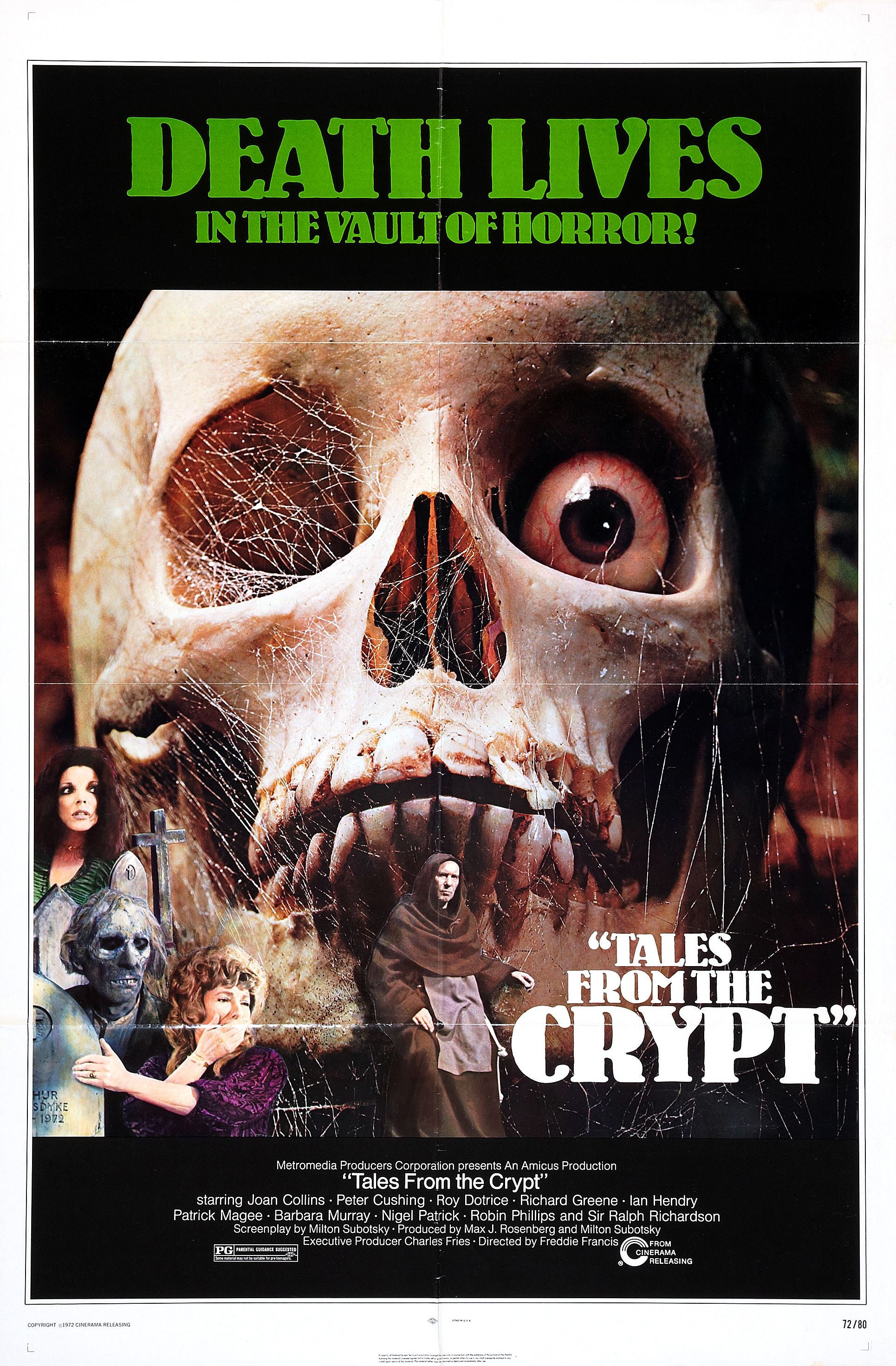
Movie Poster for Tales from the Crypt (1972)
Though it is certainly the most well known, Tales from the Crypt was not the first of the Amicus anthology horror films. Previous installments were written by a single screenwriter or adapted from short stories in Weird Tales or Unknown. Tales from the Crypt adapts five stories from three different EC Comics titles.
“…And All Through the House” kicks off the film after the wraparound introduction. The tale of yuletide homicide first appeared in The Vault of Horror #35.
(If you haven’t already, check out our previous look at this spectacular film.)
Joan plays Joanne Clayton, a woman who coldly and calculatedly murders her heavily-insured husband on Christmas Eve while her young daughter presumably dreams of sugar-plums upstairs. Meanwhile, the usual holiday-themed radio programming is interrupted by a warning that there is a lunatic on the loose. Joanne is too distracted to take note of this obviously important development. She is soon forced to split her time between careful clean up, tending to her restless daughter, gloating over her triumph, and, eventually, dodging a murderous maniac in a Santa suit.
The whole affair moves at a frantic pace, effectively building tension. Joanne clearly can’t call for help until her own crime is effectively covered up, and the audience is certainly expected to be conflicted about rooting for her. Oliver MacGreevy is suitably grimy as the not-so-jolly madman.
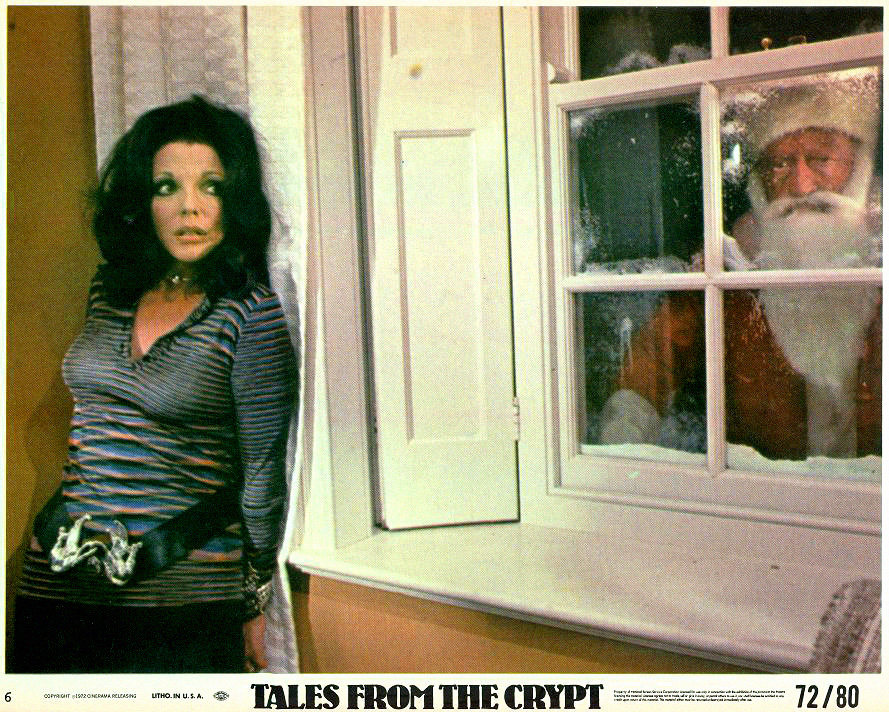
Joan Collins and Oliver MacGreevy in Tales from the Crypt (1972)
While also directed by Freddie Francis Tales That Witness Madness was NOT an Amicus production, though it easily fits in with the others of its ilk and era. Instead of adapting stories from EC Comics, the four segments and the wraparound framework were all written by veteran genre actress Jennifer Jayne (Dr. Terror’s House of Horrors). Jayne definitely understood the nature of these morbid morality tales and delivers a solid set that are very distinct from one another, serving up a diverse selection of thrills. Sadly, Jennifer Jayne would have only one other screenwriting credit with the delightfully daffy Son of Dracula (1974), under the pseudonym Jay Fairbank.
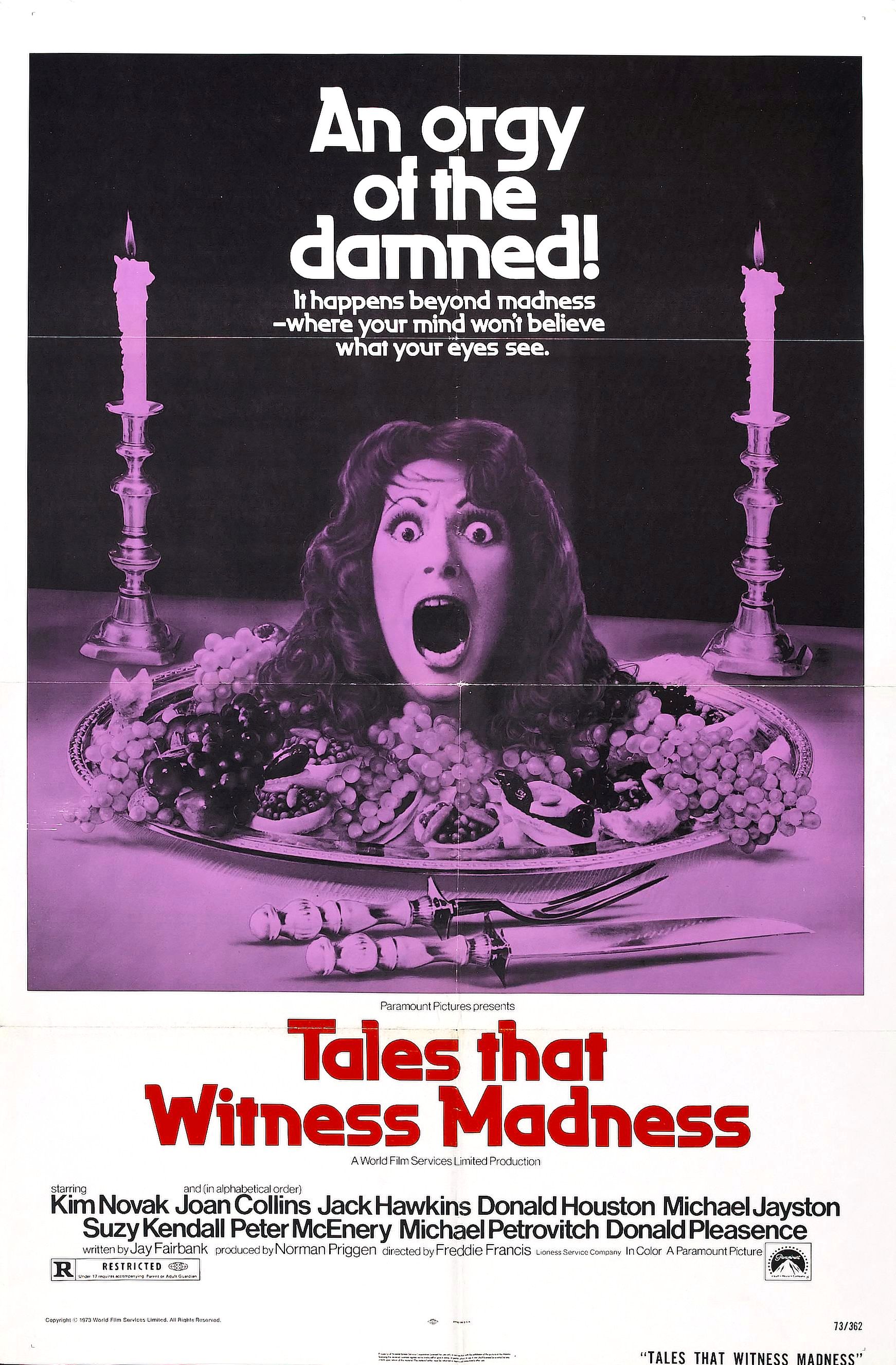
Movie Poster for Tales That Witness Madness (1973)
“Does anybody in here love me?” asks Brian Thompson (Michael Jayston). This is the loaded question that launches “Mel,” the third segment in Madness. Brian was out for a morning jog when he literally stumbled upon the love of his life, a strangely buxom hunk of fallen tree. He drags the thing home, much to the chagrin of his coquettish wife, Bella (Joan Collins).
The viewer likely has a better understanding of Bella than her own husband as he deflects her contempt for the newest addition to their stately home. “Your artistic sympathies will leap to the fore, and you’ll grow mad about it.” Mad, indeed. He does manage to bribe her with cigarettes and chocolate, however, so he’s not completely oblivious.
Writer Jennifer Jayne layers more than a little subtext in these opening scenes, and one can’t help but wonder if it isn’t drawn from personal experience. Brian has designs on bringing “Mel” (so named from the name or initials carved into “her” trunk) into his home, cleaning her up, and making her beautiful. Based on the transactional nature of their interactions, one can imagine this is not too far removed from how Brian once viewed Bella.
Interestingly enough, while Bella is none-too-fond of Mel, it is the tree that shows the first tinges of jealousy, seemingly weeping at displays of what passes for affection between the married couple. Their rivalry steadily escalates, from leaves shed in defiance, to spiky thorns that draw first blood, to an angry splash of what appears to be cognac. Eventually, Bella is left to leverage the only advantage she believes she has, her sexual wiles. “Brian, somebody up here loves you,” she teases.
Later that night, Bella is tormented by nightmares of Mel and other flora assaulting her. This scene seems contrived purely so Director Freddie Francis can apply some comic book cinematography in lurid reds and greens, since it otherwise adds nothing to the plot. As the fiendish foliage thrashes Bella out of her baby doll dress, the influence on a young Sam Raimi (and others) seems pretty likely.
The final showdown between Bella and Mel ranks right up there with Alexis Colby and Krystle Carrington, though I don’t recall Alexis ever bringing a machete into the proceedings. The resolution of “Mel” is predictable, but macabre fun in a darkly cynical fashion that’s appropriate to the genre. It’s certainly a chilling indictment of trophy wives as likely only a woman in the film industry could deliver.
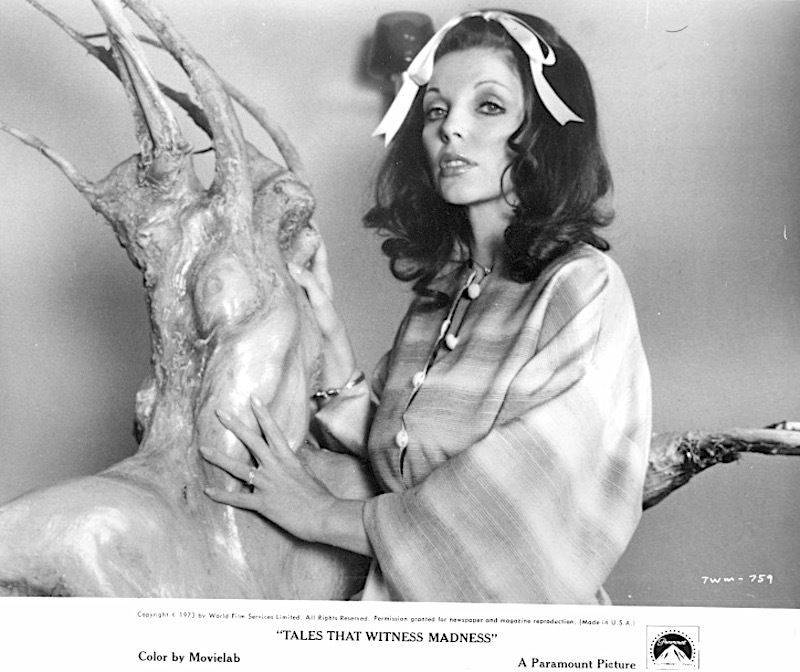
Joan Collins and rival “Mel” from Tales That Witness Madness (1973)
On stage or screen big and small, Joan Collins has played characters who seduced, schemed, and inspired for more than 70 years. While she has never forsaken her poise, she is not too pretentious to be a horror icon or a schlocky grand dame. Today, WeirdFlix toasts the lovely lady and extend her plenty of “champagne wishes and caviar dreams”.
Sadly, we missed 2016, but last week marked the end of Weird-O-Ween 2017 here at WeirdFlix.
My wife (“J-Dogg”) and I each picked four selections for our Halloween stay-cation, for a total of eight films to screen over the four days. Some are films we hadn’t seen before, others are beloved classics. In the end, we had a few surprises from both categories. Seen any of these or have recommendations of your own? Please leave a comment. We’d love to hear from you.
Here is a quick rundown of the films and pairings:
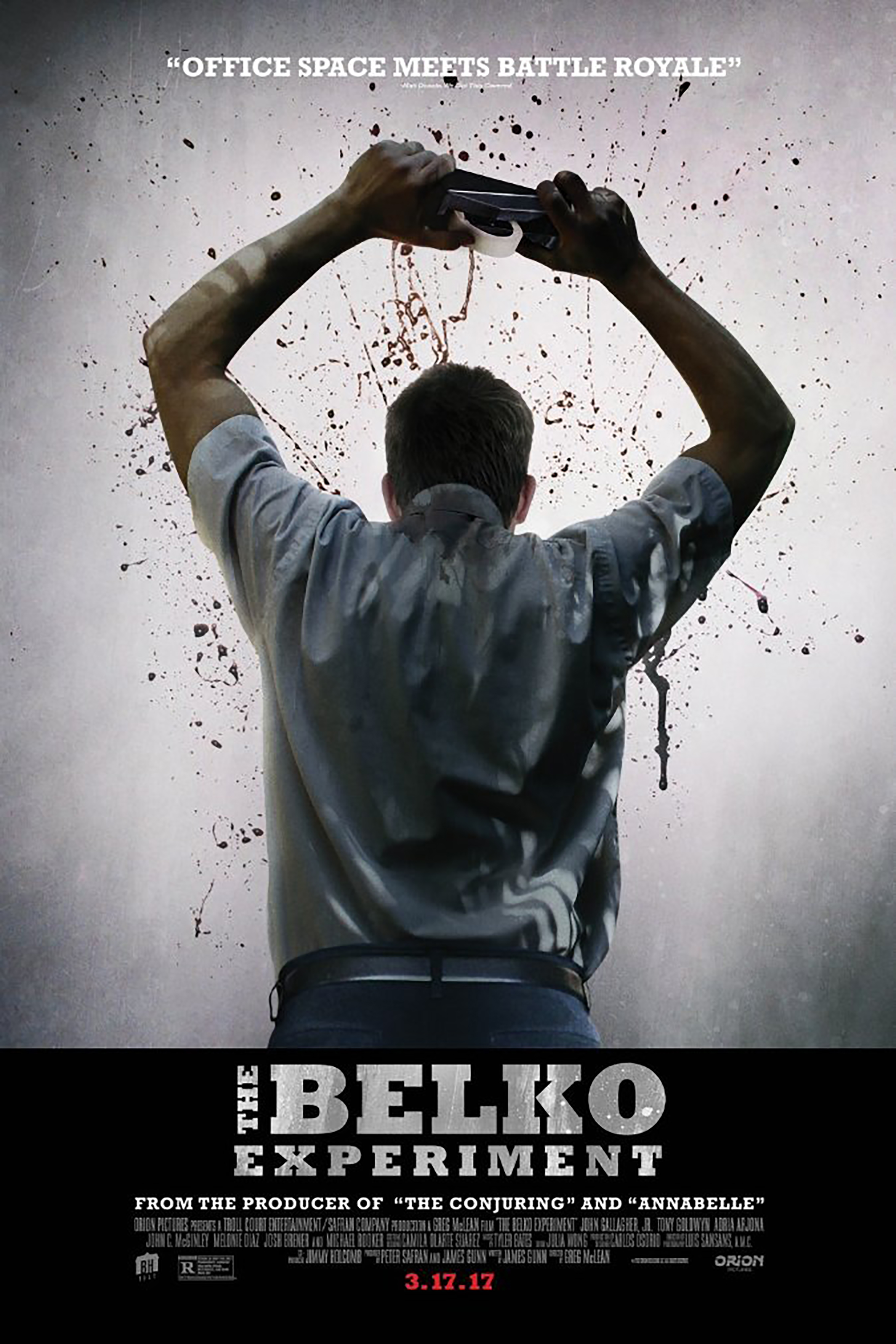
Movie Poster for The Belko Experiment (2016)
Having had plans for Halloween night, we got started earlier in the day with a pair of more modern horror films, ones that wouldn’t be as impaired by the autumn sunshine and noise of city workers tearing up the neighborhood. Our first two films were both new to us, but selected because of our shared admiration of the filmmakers, Greg McLean and James Gunn and Justin Benson and Aaron Moorhead, respectively.
The Belko Experiment manages to nail both corporate culture and the frailty of human civilization quite well, but its unrelenting cynicism may be too much for some viewers. It is fairly well constructed and doesn’t waste a lot of time on unnecessary why’s and wherefores, but these concessions also expose some shortcomings in story structure. For example, there are a few scenes where decisions seem to be made “because protagonist” rather than for a narrative or character-based purpose. Overall, though, if Battle Royale meets Office Space is your particular cup of tea (or company coffee, natch), this film delivers on its singular premise.
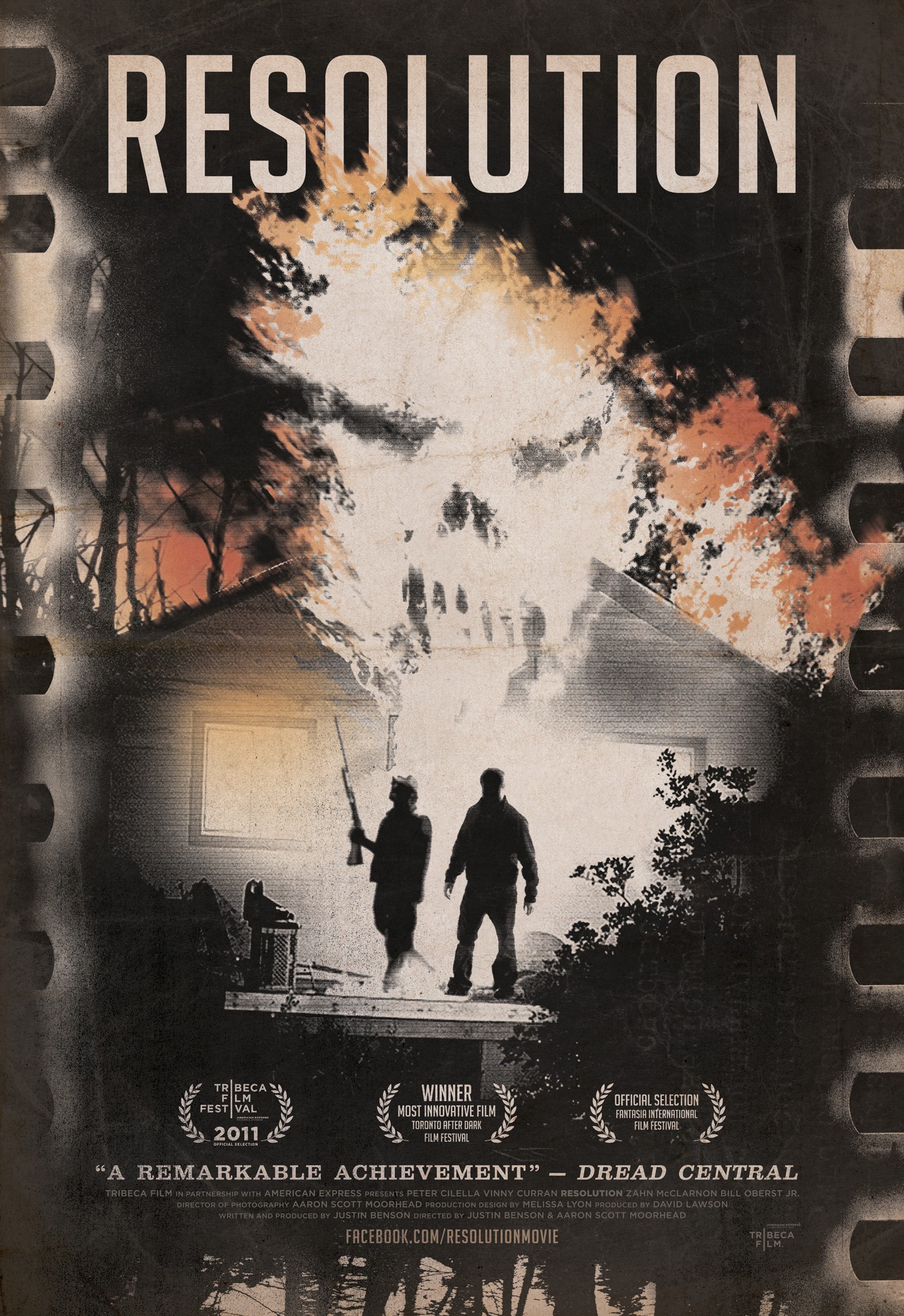
Movie Poster for Resolution (2012)
After digging The Endless at Fantastic Fest this past year, my wife and I thought it would be groovy to catch up on the films of Justin Benson and Aaron Moorhead. Resolution is their first feature, and it is a trippy little bit of sci-fi horror that keeps you off balance with twists and laughs in equal measure.
The cast is limited but solid, and the film primarily focuses on drug addict Chris (Vinny Curran) and his well-meaning best friend Mike (Peter Cilella) who handcuffs him to a pipe in a half-finished shack in order to help get him clean cold turkey. Zahn McClarnon (Bone Tomahawk) also stands out as the menacing Charles.
This is definitely a more psychological and thought-provoking film than scary or action-oriented, but for those who appreciate the work of Nacho Vigalondo, Adam Wingard, or Ti West, this is indie genre fare at its finest.
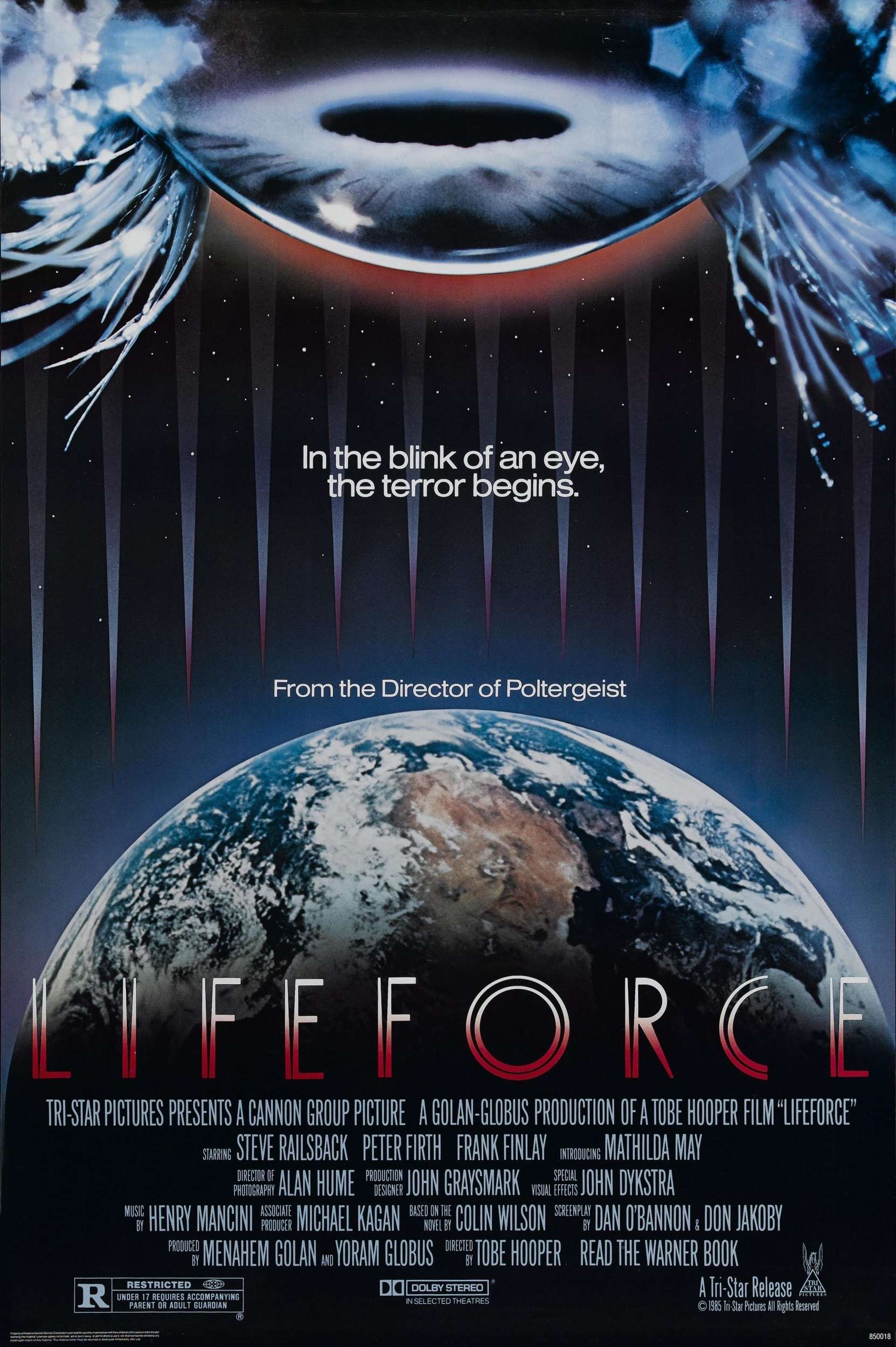
Movie Poster for Lifeforce (1985)
The kinkiest Quatermass Experiment ever.
It’s easy to see why Lifeforce wasn’t more successful. It’s a distinctly British, very old-fashioned sci-fi/horror film, but with copious nudity, violence, and some deeply anti-Thatcher political themes. This limited its target audience to a seriously narrow niche, but we are admittedly very much a part of that niche.
Dan O’Bannon and Don Jakoby’s adaptation of Colin Wilson’s 1976 novel The Space Vampires covers a lot of the same ground as O’Bannon’s Alien screenplay in its first act. Once we return to Earth, however, the movie takes a dramatically different turn and leans hard into its Dracula inspiration. As it goes along, Lifeforce does feel like three films smashed together in an homage-a-trois, but the whole is largely successful outside of some questionable effects and awkward exposition. As far as vampire apocalypse movies go, you could do far worse.
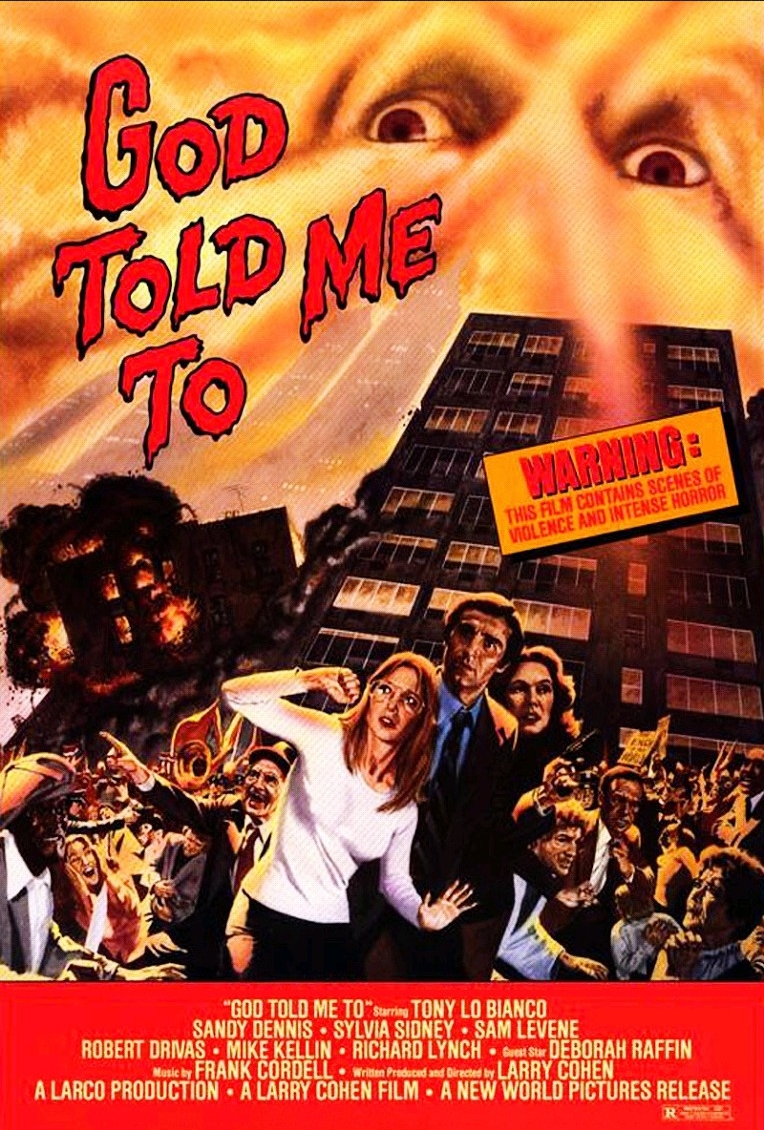
Movie Poster for God Told Me To (1976)
Writer/Director Larry Cohen doesn’t hedge, and he doesn’t compromise. I can only imagine some of the conversations during the production of God Told Me To, a film that couldn’t care less about your views on humanity, authority, and faith. Cohen delivers a transgressive gut-punch with spree killers, alien abductions, and virgin births, and yet, it all somehow hangs together for one of the tighter takes on this sort of material.
All of the performances sing, and Cohen’s guerrilla style of film-making gets some wonderful reactions from unsuspecting New Yorkers. An emotionally-charged scene between star Tony Lo Bianco and Sylvia Sidney (Beetlejuice) certainly stands out. God Told Me To is not a happy-go-lucky bit of b-movie cheese, and it’s likely to upset or offend some viewers, but if you’re willing to be challenged and made uncomfortable, it’s a thoughtful and interesting film. Highly recommended.
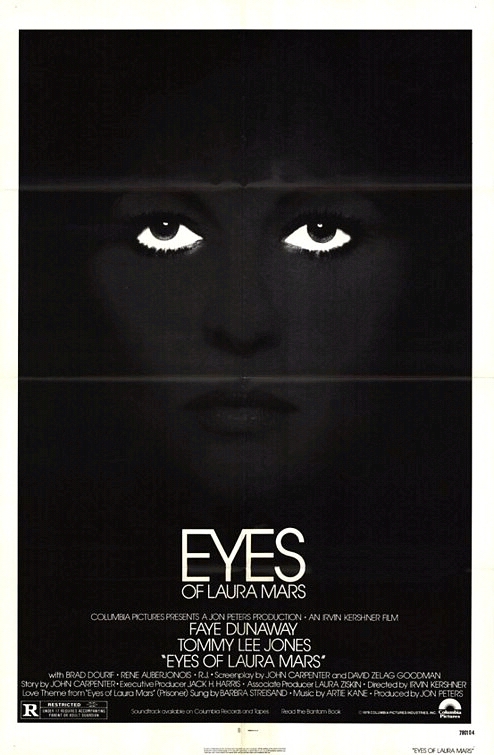
Movie Poster for Eyes of Laura Mars (1978)
Hard to believe it’s been over five years since we last took a look at this film.
Controversial but celebrated fashion photographer Laura Mars (Faye Dunaway) is having visions of murder, seen from the eyes of the killer himself. This, of course, makes her the prime suspect. Thankfully, smitten police detective John Neville (Tommy Lee Jones) believes her inexplicable story.
Whodunit? Is it the ex-con chauffeur played by the incomparable Brad Dourif? Or her flamboyant agent played with aplomb by René Auberjonois? Or is it her trophy ex-husband who followed her from San Francisco (Raúl Juliá at his slimiest)?
I’ll never tell, but with a supporting cast stacked with such genre heavyweights, John Carpenter’s ode to Dario Argento as directed by Irvin Kershner (The Empire Strikes Back) is a shamelessly sleazy but stylish 42nd Street treat.
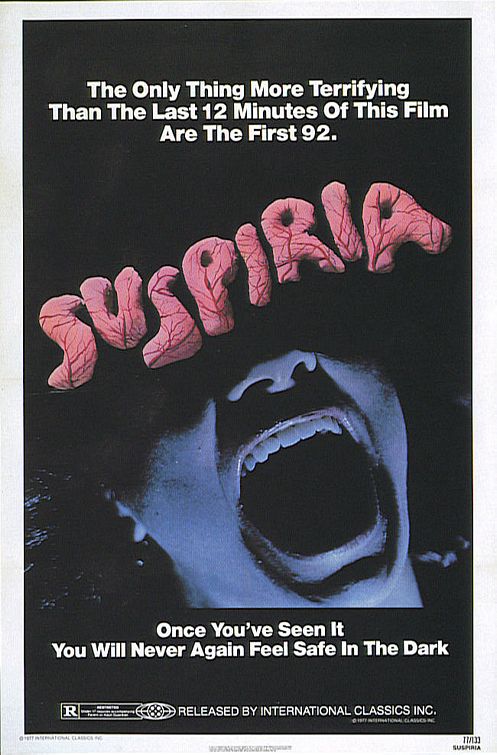
Movie Poster for Suspiria (1977)
We’ve sustained our Dario Argento kick through the last two years and have caught up on quite a few of his early films. I was disappointed then that we didn’t get to catch the 4K restoration of Suspiria as it made the rounds of the festival circuit, so I thought it’d make a good revisit during Weird-O-Ween this year. Sadly, my disappointment was only beginning.
I realize I haven’t seen what is largely considered Argento’s masterpiece in over twenty years, since back in the VHS era. And, I have to admit, there was an obvious reason I hadn’t revisited it in all that time since I found I didn’t enjoy the rewatch as much as I had hoped.
Sure, it’s often visually stunning and the score by Goblin is iconic, but Suspiria is full of embarrassing indulgences as well. Monster effects (dog and bat puppets) are subpar and more reminiscent of Lucio Fulci’s work than Argento’s typically tight staging. In fact, the whole film feels like a Mario Bava tribute by way of Fulci. Udo Kier is wasted in an unnecessary exposition dump scene. The dance academy setting doesn’t really figure into the proceedings and never feels truly authentic. It could’ve been a convent or an opera house or whatever.
There are also some digs at Eastern Europeans that narrowly avoid overt antisemitism or pejorative treatment of Romani people. These bits get under my skin more than any of the imagery. It would be easier to overlook if any of the witchcraft material had any depth, but it doesn’t. It’s just lip service, and from a director that helmed some of the more tightly constructed giallo murder mysteries, it seems unconscionable to just phone in this Alice in Wonderland plot.
In the end, we can’t say we hated Suspiria. It was an okay highlight reel of directorial tricks, lighting effects, and set design. It’s certainly not Argento’s best by our reckoning. We can’t really recommend it, since, if this is your jam, we’d likely be preaching to the choir at this point.
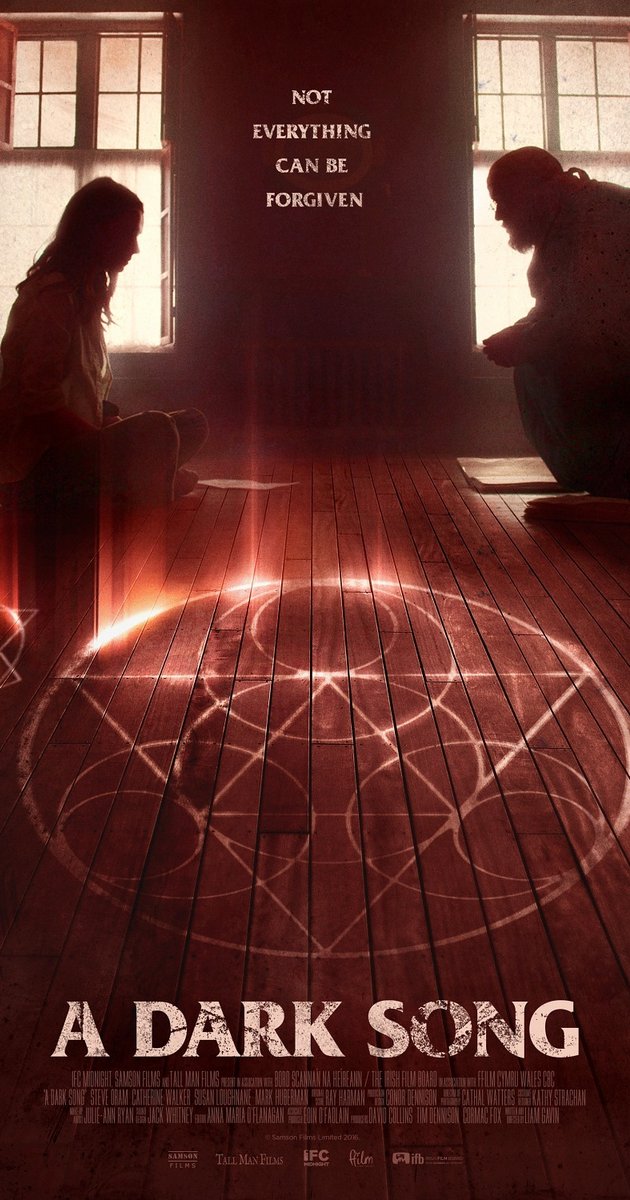
Movie Poster for A Dark Song (2016)
A Dark Song quickly sets up a wonderful premise. A mother enlists an occultist to help her contact her dead son and ask a favor of her guardian angel. The occultist, in turn, will also get the opportunity to request a favor. The rite, held in a sprawling rural manor without heat, will be grueling, dangerous, and sacrifices will have to be made along the way.
Unfortunately, all of this is squandered in the middle act as Sophia Howard (Catherine Walker) vacillates between impatience, doubt, resignation, and rage without a clear arc. It’s almost as if these scenes are just thrown in with a random sequence. This could play into the film’s idea that time has lost its linearity, but they are sprinkled in amongst scenes of cliche and tired lo-fi spookies (a spectral barking dog, “bumps in the night”, finding a sentimental object in inexplicable places, a voice on the other side of the door that clearly is not her son, trying to just literally walk away from the house only to end up coming back up the walk in a truly derivative riff, etc.).
The film doesn’t seem to so much build and escalate as run out of ideas until it delivers on its promise of angels and demons in underwhelming fashion. It’s probably best to leave the unimaginable as just that. The CGI divine just doesn’t cut it. Another disappointment, sadly.
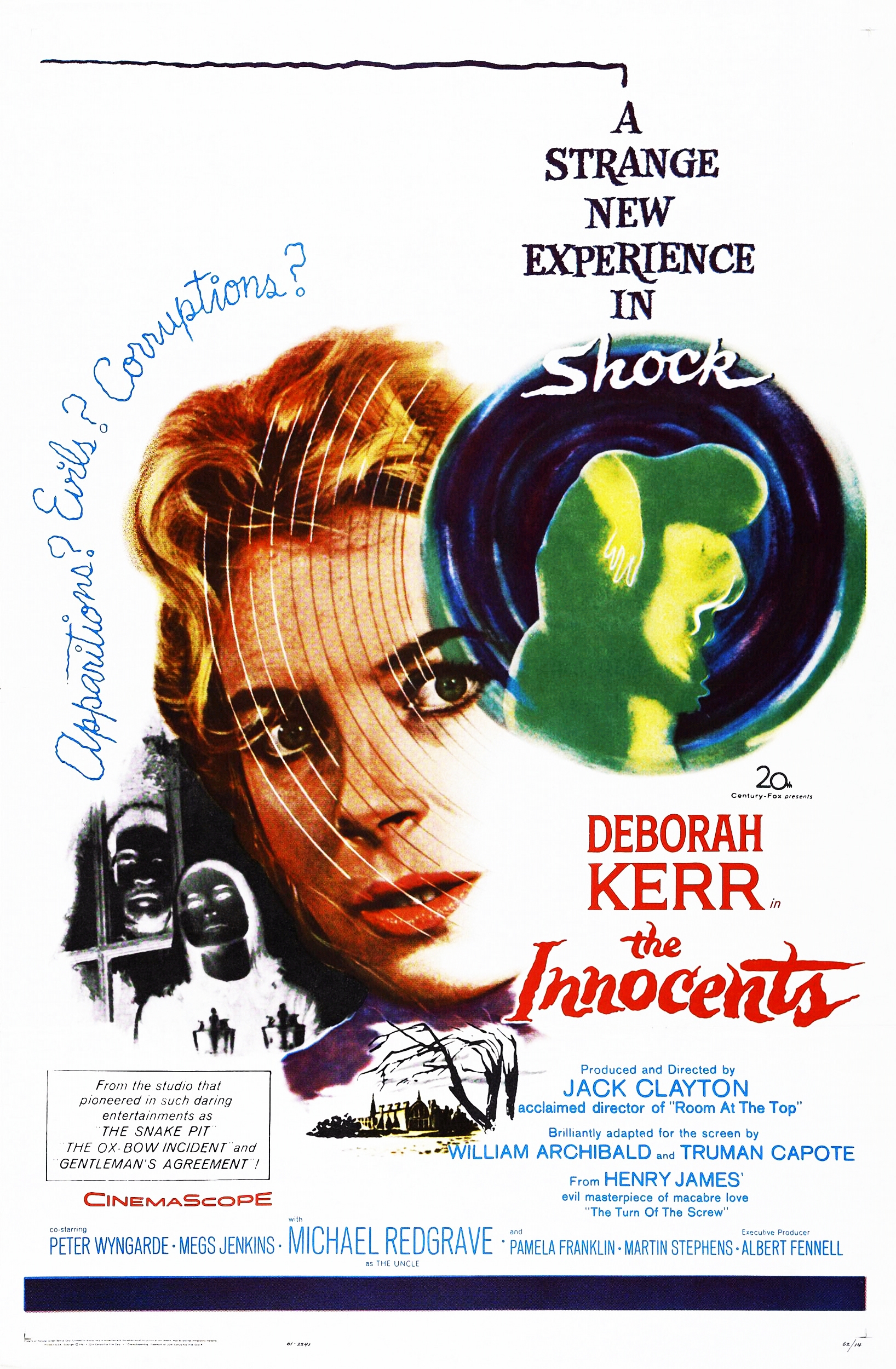
Movie Poster for The Innocents (1961)
The Innocents is an adaptation of the gothic ghost story The Turn of the Screw by Henry James. Deborah Kerr plays governess Miss Giddens, hired to care for little Flora and her brother Miles at the rambling English country estate of Bly. There, amongst its countless empty rooms and seemingly endless gardens, she becomes convinced that a pair of dead lovers are possessing the siblings, and she will do whatever it takes to save them.
This is dark, disturbing, even transgressive material for a black-and-white studio film from 1961, let alone a Victorian novella, but despite its embarrassingly sensationalized trailer, The Innocents handles the tale with an artistry that strands the viewer in Bly along with Kerr. Director Jack Clayton and legendary Hammer cinematographer Freddie Francis manage to make the wide aspect ratio (filmed in Cinemascope) and elaborate sets still feel claustrophobic with shadows or foliage obscuring the boundaries.
I loved The Innocents when I first saw it on TCM several years ago, and I liked it even more this time around on Criterion Collection DVD. It’s a chilling story well told and a fitting close to this year’s Weird-O-Ween.
Hopefully, we’ll get back on track and do this again next year (and manage to post the results more timely). Any suggestions? Let us know! Until then, “sights and sounds… pull me back down… another year.”
My wife and I had the privilege of seeing the pilot episode (“Experiment 1101″) of Mystery Science Theater 3000 Season 11 at the “Red Carpet Backer Screening” in New York City last week. It was the capper to a truly awesome Valentine’s Day spent with the love of my life and my soul mate. I am a fortunate man, indeed.
Before we get to the event itself, I do want to take a moment to commend the West End Bar & Grill in Hell’s Kitchen. Not only did they not balk at two weirdos in costume waltzing in for an early romantic dinner, they presented us with great service and the best food and drink of the trip. Definitely check them out the next time you’re in midtown Manhattan. I know they’re on our shortlist of places to revisit in NYC.
Regarding Experiment 1101… Well, not much I can say, really, without violating the NDA we signed. Dude, it was rad! In all seriousness, I think everyone involved did an amazing job and the new season looks to retain everything that made MST3K one of my favorite things.
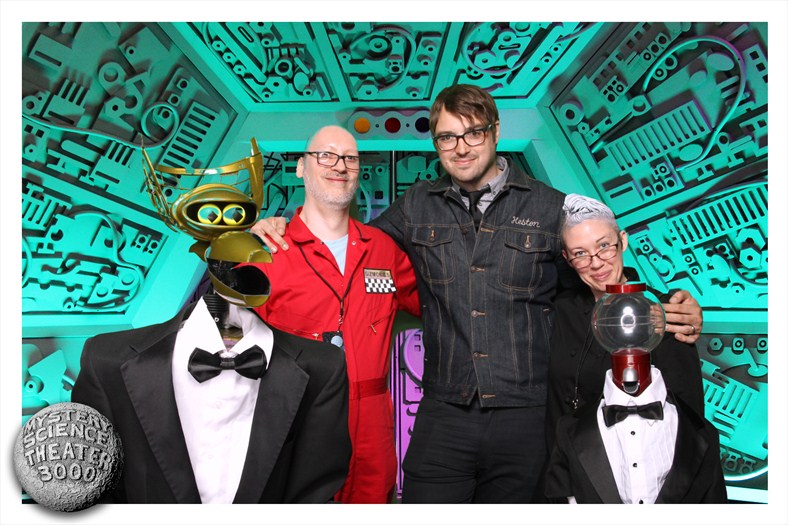
Ray and Jess with Jonah Ray, Crow, and Tom Servo at the MST3K New York Screening afterparty.
(Check out that embroidered “Heston” on Jonah’s shirt. Didn’t notice that before today.)
I typically seize up at words like “afterparty” or “mixer.” My hearing isn’t the greatest under the best of circumstances, and in events like this, I tend to get overwhelmed and withdrawn. Even when people do engage me in conversation, it can be difficult for me to keep up. That being said, we had a great time meeting Joel, Jonah Ray, and Baron Vaughn (the new voice of Tom Servo) as well as our fellow MSTies. Everyone was warm, friendly, and excited about the upcoming season.
I’m hoping we’ll get the chance to see Jonah Ray at Fantastic Fest again this year. While The Meltdown with Jonah and Kumail may be no more (it ended its final season in November, 2016), there’s still the possibility of a stand-up event or maybe even a film screening of some sort with Jonah and/or Kumail. Fantastic Fest is full of surprises, so who knows?
No trip to the Big Apple is complete without a little danger. Imagine our surprise when, upon returning to Penn Station a little bit inebriated and a whole lot exhausted at around 1:40 a.m., we discovered the next train to New Jersey wouldn’t be departing until 4:17 a.m. Happy Valentine’s Day, honey!
Now, two people in MST3K costumes were unsurprisingly not the strangest looking folks in Penn Station at that time of the morning. I think there may have been someone with a sweet Torgo costume, but I wasn’t going to approach to confirm. I also apparently missed a “pants-off dance off” by being unobservant, but I don’t know if “missed” is the right term. Maybe “narrowly avoided” is more accurate.
Anyways, we’re back, and I hope you’ll come back and join us when next we have “Movie sign!” Until then, fare thee well!
R.I.P. Gene Wilder (1933 – 2016)
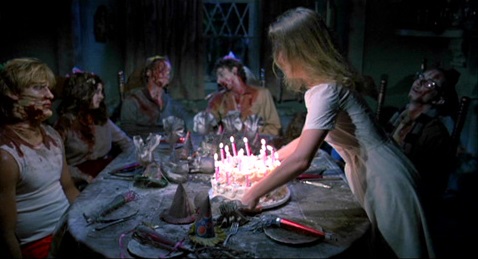
Melissa Sue Anderson and the “Top Ten” in Happy Birthday to Me
– Alan Moore after
Rev. T.F. Thiselton-Dyer’s
British Popular Customs,
Present and Past.
Tonight marks the end of the first annual Weird-O-Ween here at WeirdFlix. My wife and I each picked one selection per day for our four-day weekend. Some are new selections for one or both of us, others are beloved classics. Here is a quick rundown of the films and pairings:
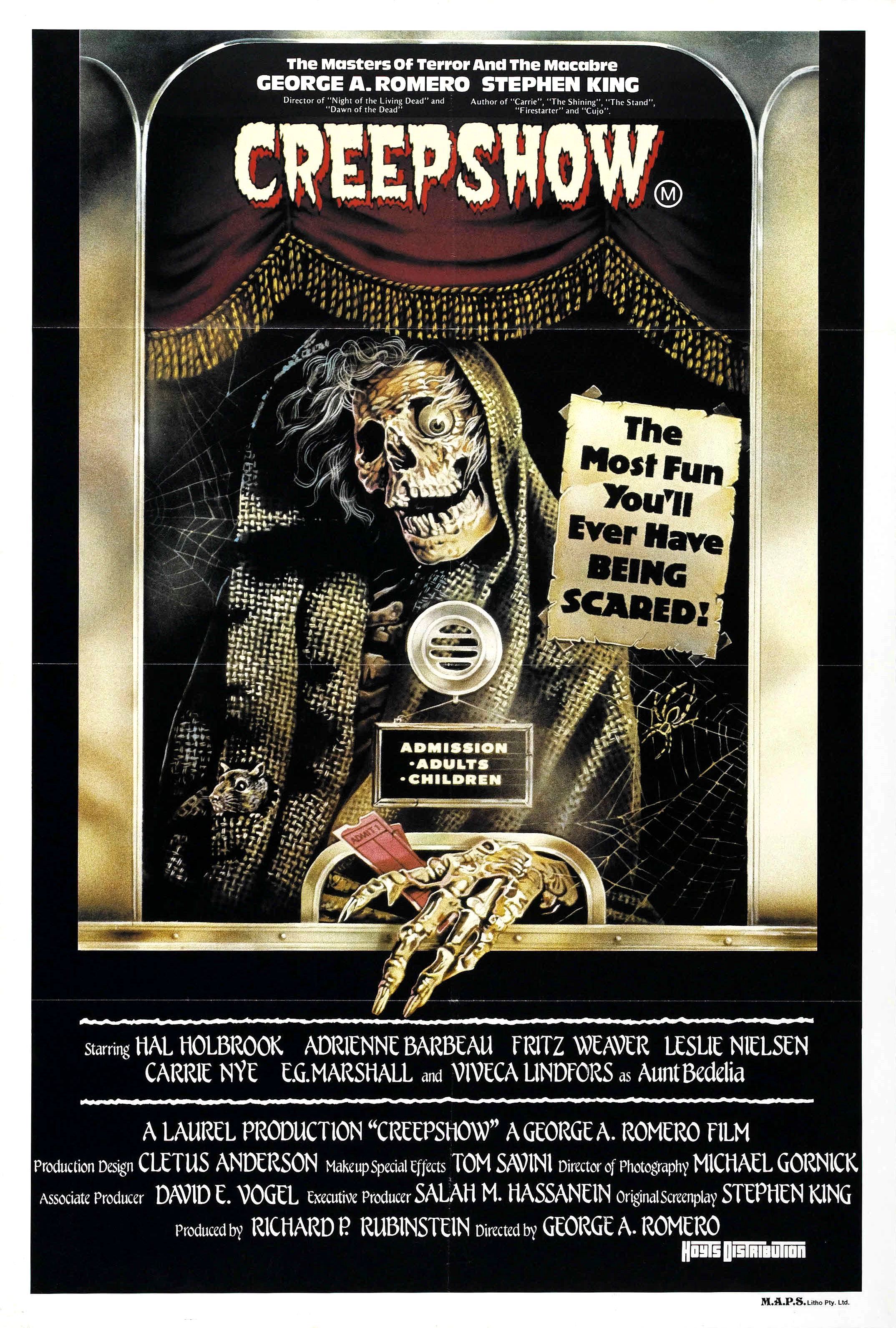
Movie Poster for Creepshow (1982)
We kicked things off with a pair of portmanteau horror films. While I’m a huge fan of the classic Amicus anthology films (Tales from the Crypt, Vault of Horror, etc.), Stephen King’s loving tribute to the horror comics of his childhood and mine will always hold a special place in my heart. I can’t quite recall if I saw the film first on HBO or if I convinced my mother to order me the gorgeous Berni Wrightson comic book adaptation from the Doubleday Book Club first, but both made a lasting impression on my young mind. I spent countless hours trying to compose my own horror comics as a kid, with laughable results.
Once I had my own VHS copy of the film, recorded off of HBO, I practically wore the tape out trying to locate the marble ashtray from “Father’s Day” in each of the subsequent segments. This viewing was the first time we noticed it makes an appearance in the framing sequence as well, during the epilogue. Give Creepshow a gander, and see if you can find it yourself.
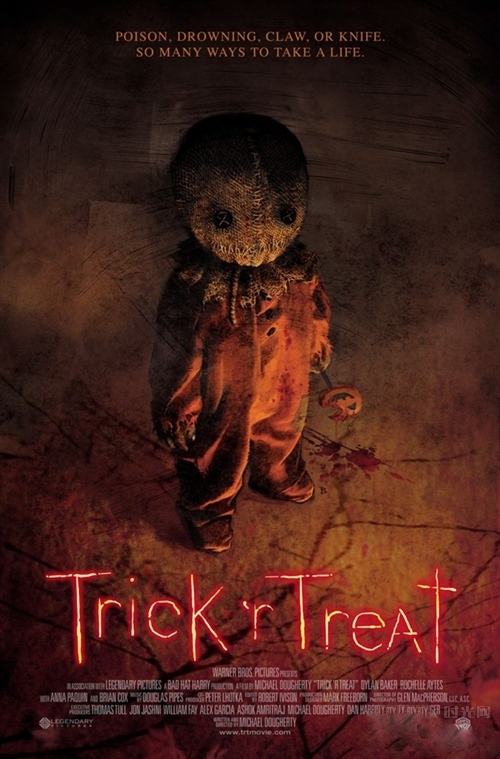
Movie Poster for Trick ‘r Treat (2007)
Trick ‘r Treat is a more modern take on the horror anthology. Rather than a set of self-contained stories, Trick ‘r Treat presents four overlapping tales that occur concurrently a la Frank Miller’s Sin City. It’s a fun gimmick that has you noticing little background details all the way through and on repeated viewings.
Though still clearly influenced by the stories and visual style of horror comics, Trick ‘r Treat abandons a host character like The Creep or the Crypt Keeper for a signature character in Sam, the spirit of Halloween. Sam appears sporadically throughout the film, but he makes his fullest appearance in the last tale, bedeviling the cantankerous Kreeg (played with grumpy relish by Brian Cox). Trick ‘r Treat boasts some great performances all around, including a rare appearance by Anna Paquin that doesn’t make me cringe.
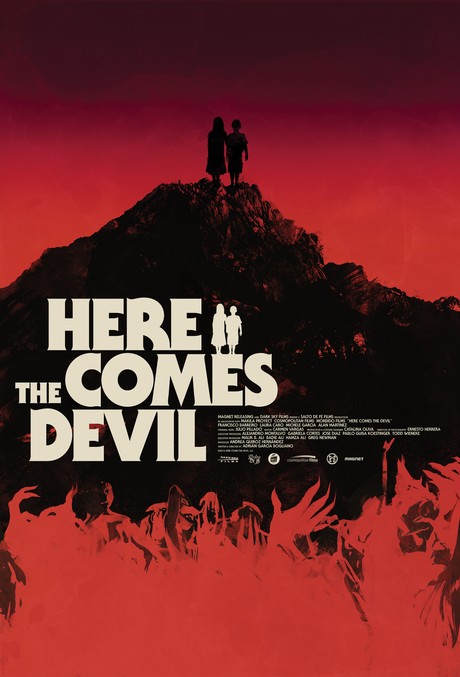
Movie Poster for Here Comes the Devil (2012)
This was a blind pick, based largely on a strong showing at Fantastic Fest 2012. Writer-director Adrián García Bogliano’s supernatural thriller gets your attention early with a graphic lesbian sex scene and vicious machete attack that sets a grindhouse tone that unfortunately jars with the rest of the film. Not to say that it isn’t interesting the whole way through.
The film centers on a pair of children who are left unattended to explore a hill. When they do not return on time, their parents begin to panic. At first relieved to have their son and daughter returned by the police, their mother begins to develop doubts that it is her children who have returned and not… something else. As she probes further, the difficult questions and uncomfortable answers make for a disturbing but engaging experience. This is not a date movie and not for the easily offended, with a fair share of nudity, sexual content, and brief but vicious bursts of violence.
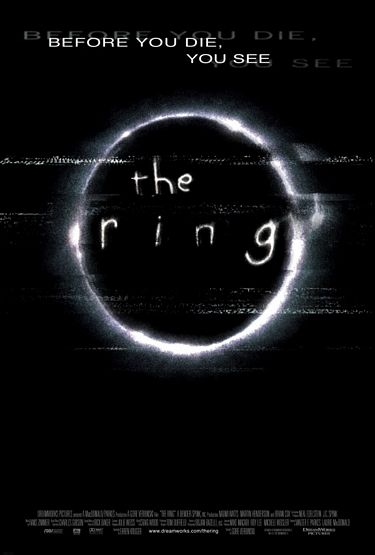
Movie Poster for The Ring (2002)
We purposefully selected the remake over the Japanese original Ringu (1998). While the original black-and-white film certainly has a lot to offer, the American version tones back some of the more surreal elements in favor of a child ghost mystery in the vein of the spooky classic The Changeling (1980). Add on a chain letter curse for the digital age, and you have enough material to build an intricate and entertaining plot.
Performances are solid all around, with an often imitated but never duplicated performance by Daveigh Chase as Samara. This marks the second appearance of Brian Cox in our line-up, and he delivers some of his lines with such pathos that they still give me goosebumps. The film’s success helped pave the way for a wave of J-Horror films and imitators, but few manage to capture the bleak resonance of The Ring.
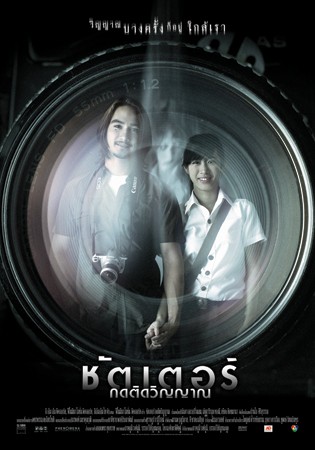
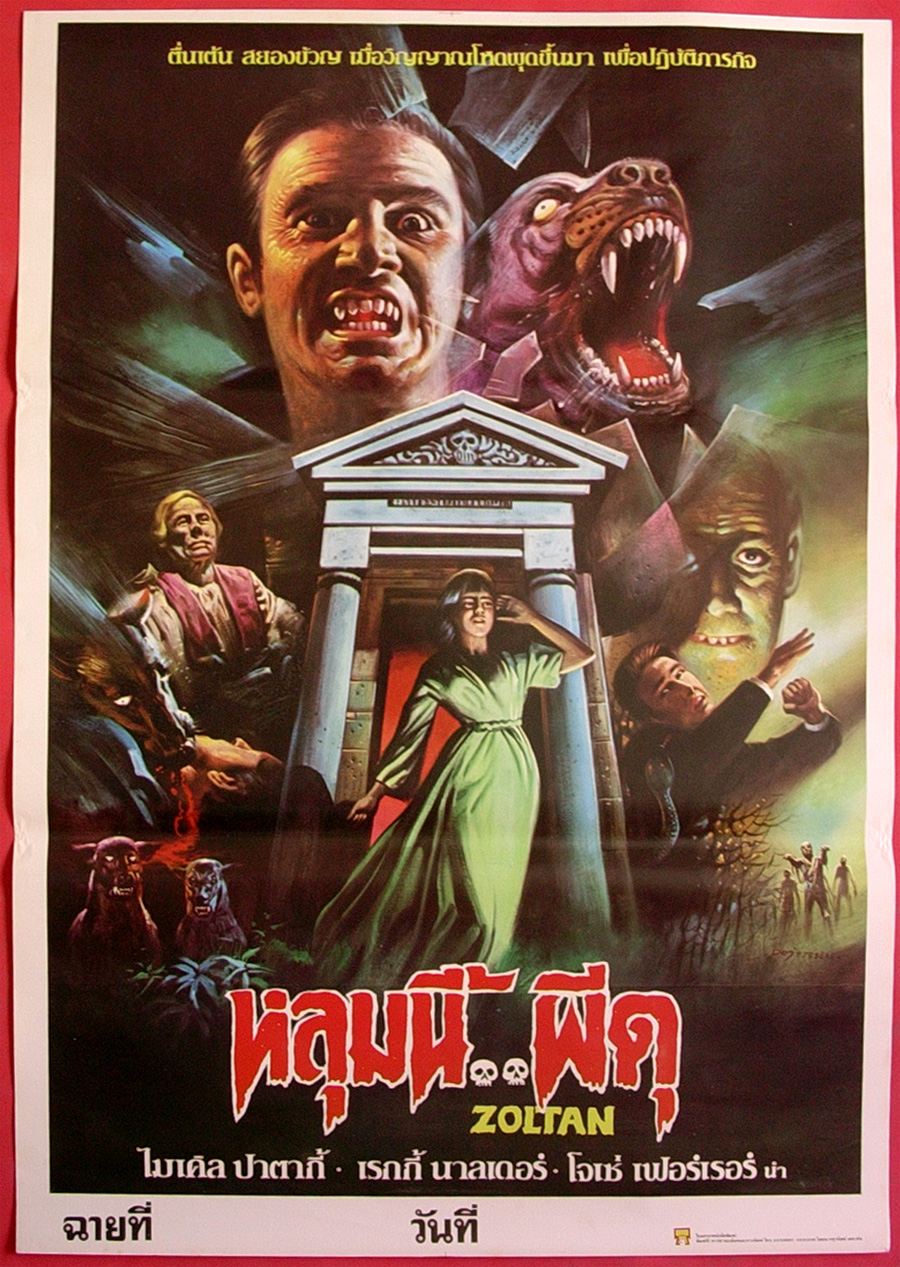
Thai Movie Poster for Shutter (2004)
Unlike The Ring, we haven’t bothered with the American remake of this Thai horror classic. J-Horror influences from The Ring and The Grudge are readily apparent in Shutter, but it offers a fresh take on the material with a cleverly constructed mystery whose revelations are unflinching. Without giving away spoilers, this is a dark film dealing with deeply disturbing subject matter outside of the routine supernatural aspects.
Spirit photography is the gimmick at the heart of Shutter, and the film does a good job of playing with that concept in its own cinematography. (Drink every time a speaking character is purposefully cropped out of frame). Despite employing tropes that have sadly become cliché, Shutter remains effectively scary even during a mid-morning screening on a rainy day.
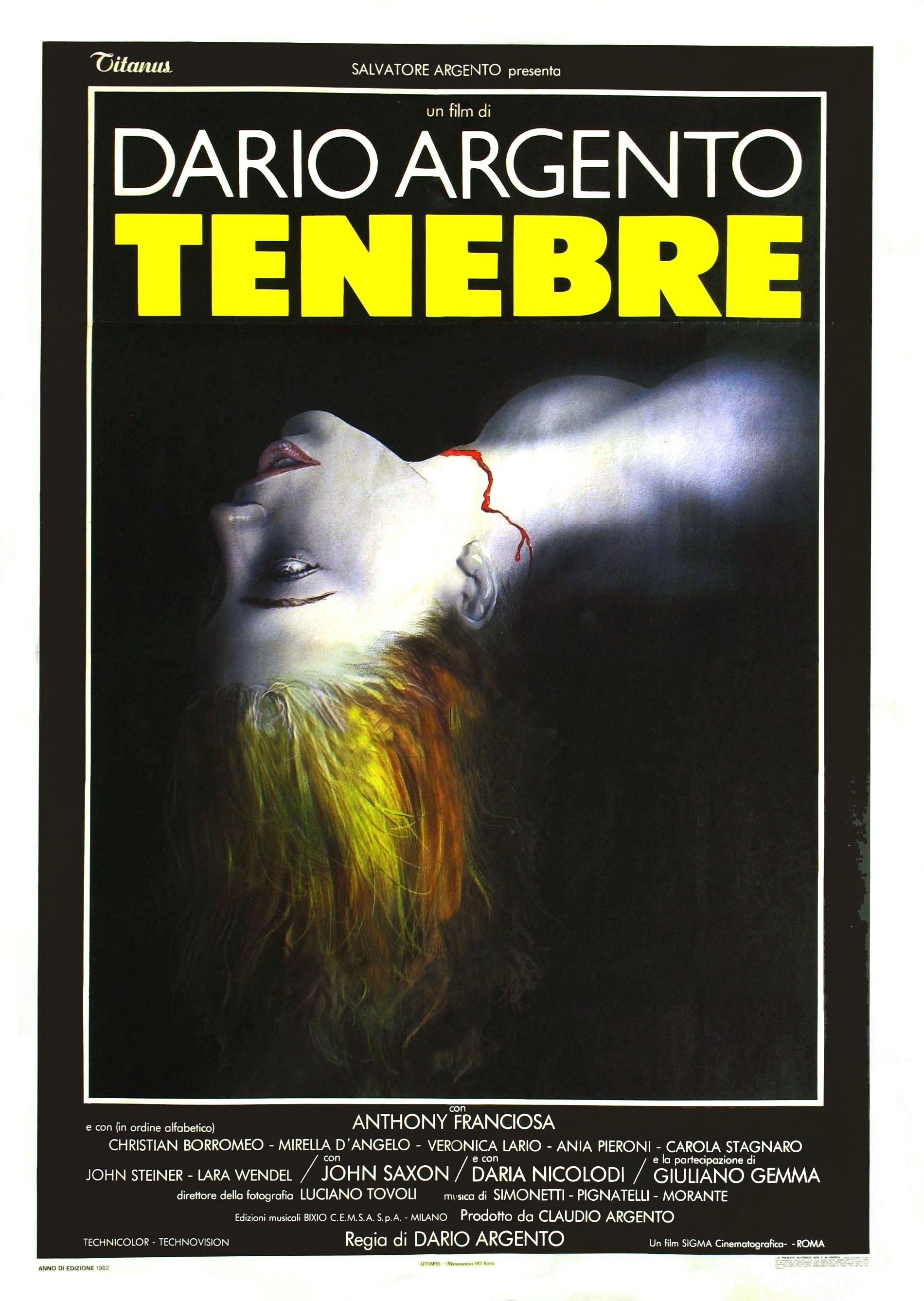
Italian Movie Poster for Tenebrae (1982)
We’ve been on a bit of a Dario Argento kick lately, and since J-Dogg had not yet seen Tenebrae, it felt like an obvious pick for Weird-O-Ween 2015. This is perhaps the most meta of Argento’s films, and it toys with the expectations of viewers already familiar with his earlier works. I could write an article a day for a week on the subtext, symbolism, and nuance of Tenebrae, and perhaps someday I will, but not today.
It would be very difficult to do so without spoiling the twists and surprises in the plot, so instead, I’ll simply give it the highest possible recommendation. This is easily one of Argento’s best, and well worth your time. We’d likely look to pick it up on HD DVD for additional viewings and analysis, but it looks to be sadly out of print. A collector’s edition DVD box set of Argento’s early films is long overdue.
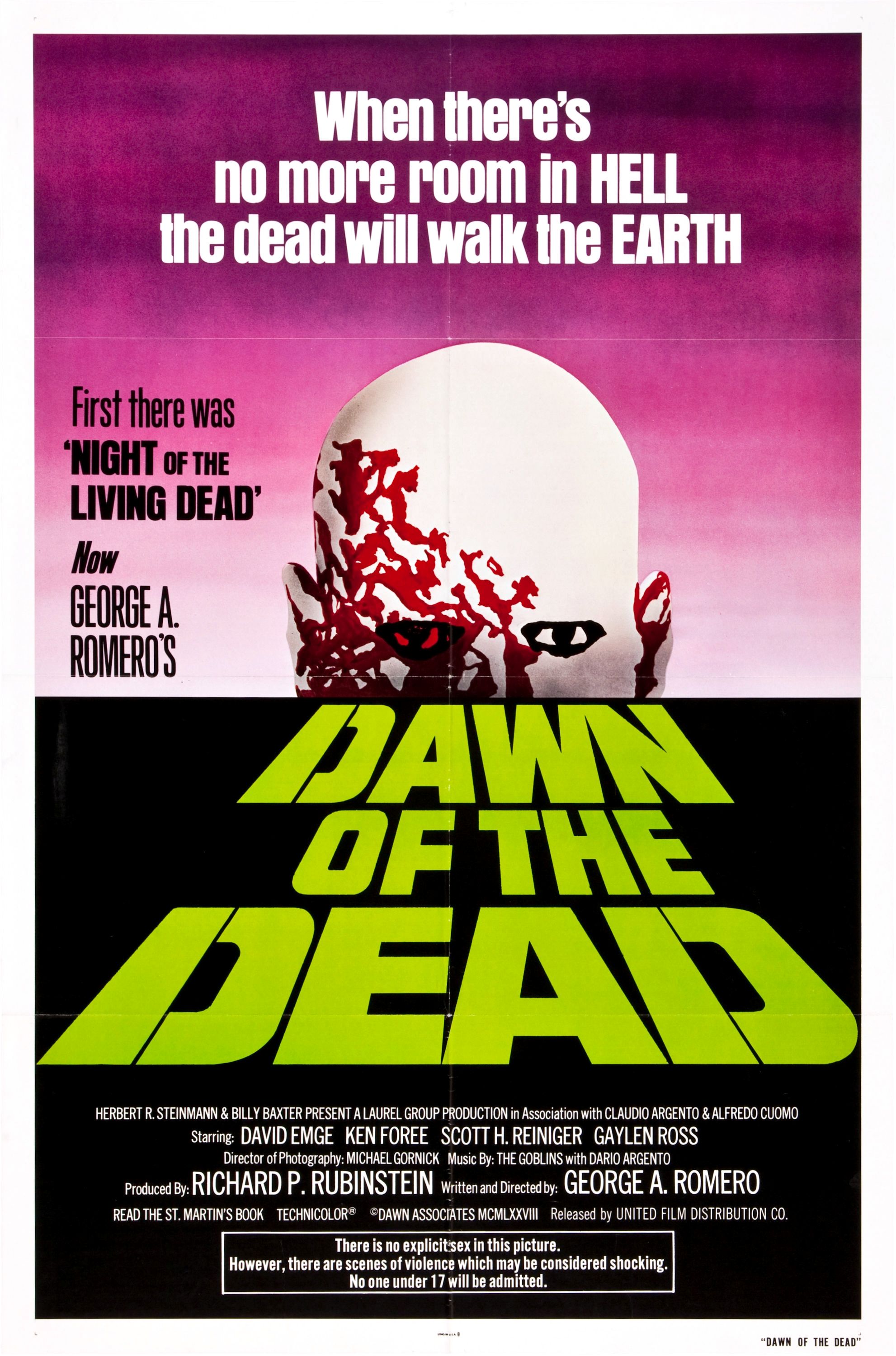
Movie Poster for Dawn of the Dead (1978)
Dawn is easily one of my favorite films of all time and set the standard by which all subsequent depictions of the zombie apocalypse (in any medium) will be judged. This is the second film on our list directed by George A. Romero and starring Gaylen Ross, Tom Savini, and John Amplas (after Creepshow). It is also the second to involve Dario Argento (script consultant here) and a score by Goblin (after Tenebrae).
Hopefully, you don’t need a plot synopsis, even if you haven’t seen this particular version (I like Zack Snyder’s 2004 remake as well). A mixed group of survivors take refuge in a shopping mall in the wake of a zombie apocalypse. There’s more to it than that, obviously, and Romero’s script says more about politics (gender and otherwise) and soulless consumerism than most other zombie movies would ever bother to attempt. Dawn of the Dead is a surprisingly deep film that still holds up even if the garish red blood and cadaverous blue makeup don’t.
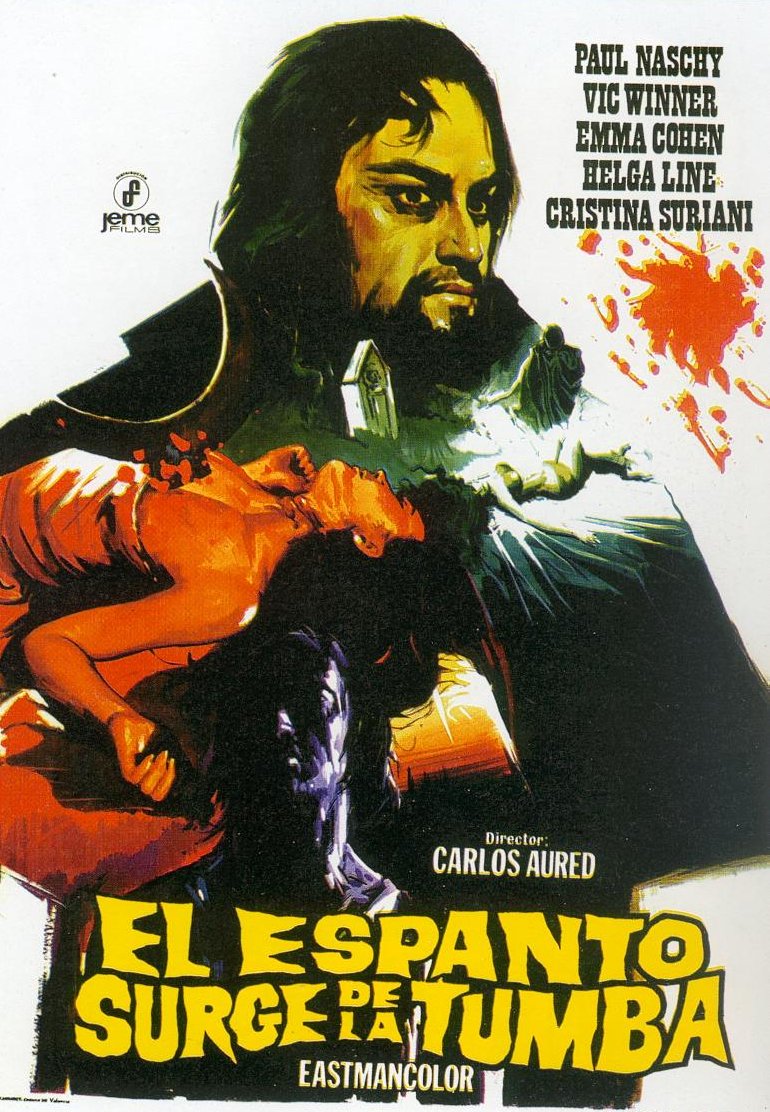
Spanish Movie Poster for
Horror Rises from the Tomb (1973)
This was the second blind pick of the eight films screened, though it is widely regarded as one of star Paul Naschy’s best. For the uninitiated, Naschy, aka Jacinto Molina, was a prolific Spanish actor, writer, and director. Perhaps his best-known work is the “Hombre Lobo” series. Though not intended as a series in the traditional sense, Naschy played tragic werewolf Waldemar Daninsky in eleven or twelve films, depending upon whether you consider the second lost film to have actually existed in any tangible form other than Naschy’s recollections.
I’m probably going to catch some heat for this, especially from Naschy loyalists, but I was disappointed in Horror Rises. It’s got plenty of gore and nudity, including full frontal Helga Liné, and heck knows I love me some Helga Liné, but the whole film felt flat and lifeless. Some unintentional humor kept our interest, mostly from awkward dubbing, ham-handed plotting, the melodramatic score, and overzealous foley. Still, it doesn’t come close to capturing the style and fun of our first Naschy, The Werewolf vs. The Vampire Woman (1971). Ah well, we’ve seen worse.
What did you watch this Halloween season? Seen any of these flix? Tell us about it! We’re already looking forward to doing this again next year. Have any suggestions? Let us know! Hasta la Lobo!
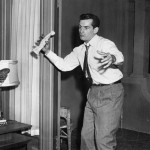
Jack Kelly was born on this date in 1927 to a family already deeply involved in “show business.” Jack’s mother was an actress and model while his father was a theater ticket broker. His older sister, Nancy, would go on to win a Tony Award and an Academy Award nomination.
Jack’s own career began at the age of two, modeling for soap ads, and he made his stage debut at the age of nine. He moved to California with his family in 1938 and went on to attend St. John’s Military Academy and UCLA. His film debut was a very minor role in The Story of Alexander Graham Bell (1939). In 1945, Jack joined the Army and flew on the first B-29 to cross the Arctic Circle.
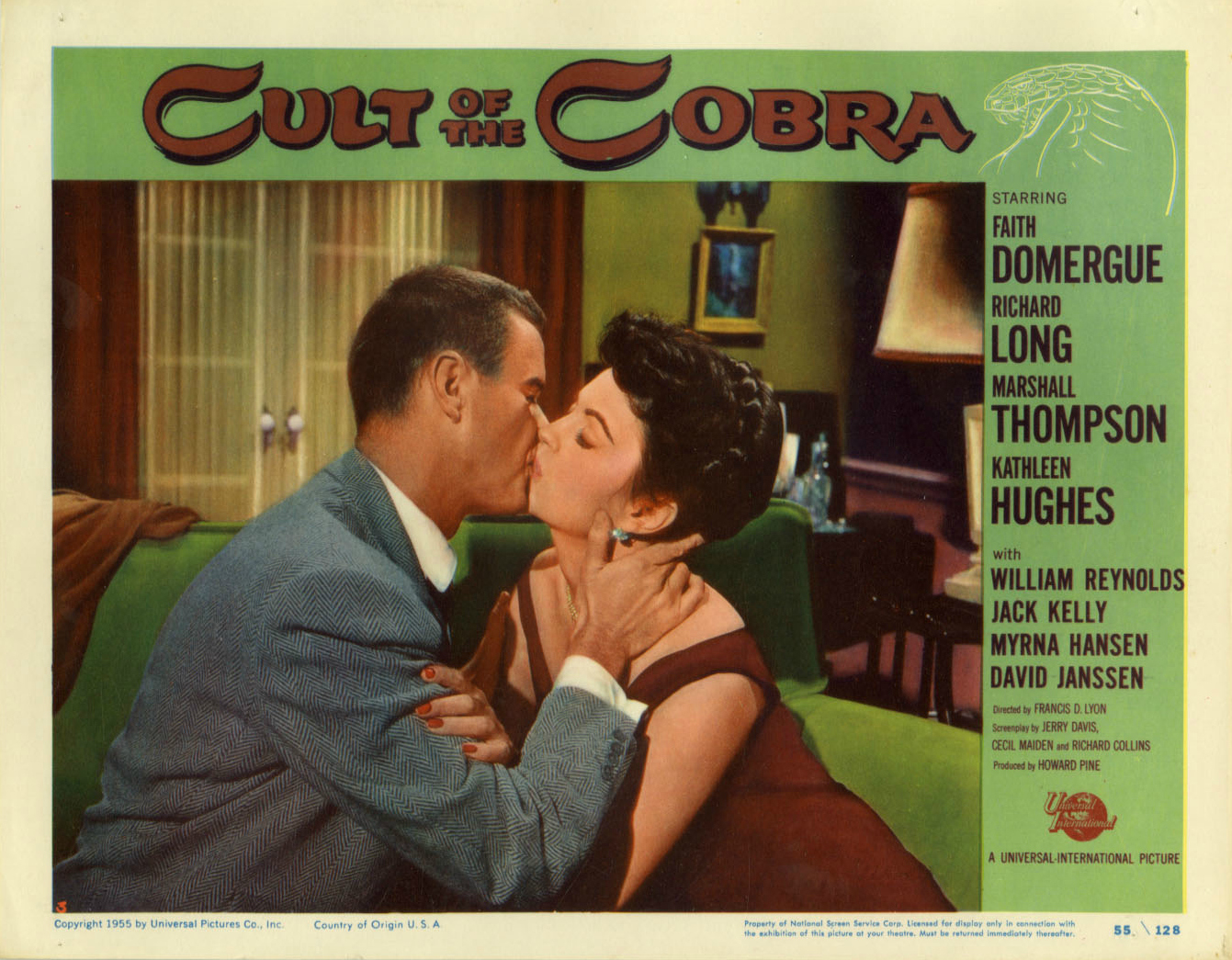
By 1955, Jack Kelly was already a veteran of radio, stage, and screen, primarily in military or cowboy roles. His Army background made him ideal for the former while the latter led to his most well-known role, but more on that later. Today, we’re going to look at one of those military roles, that of Cpl. Carl Turner in the Universal Studios monster movie Cult of the Cobra.
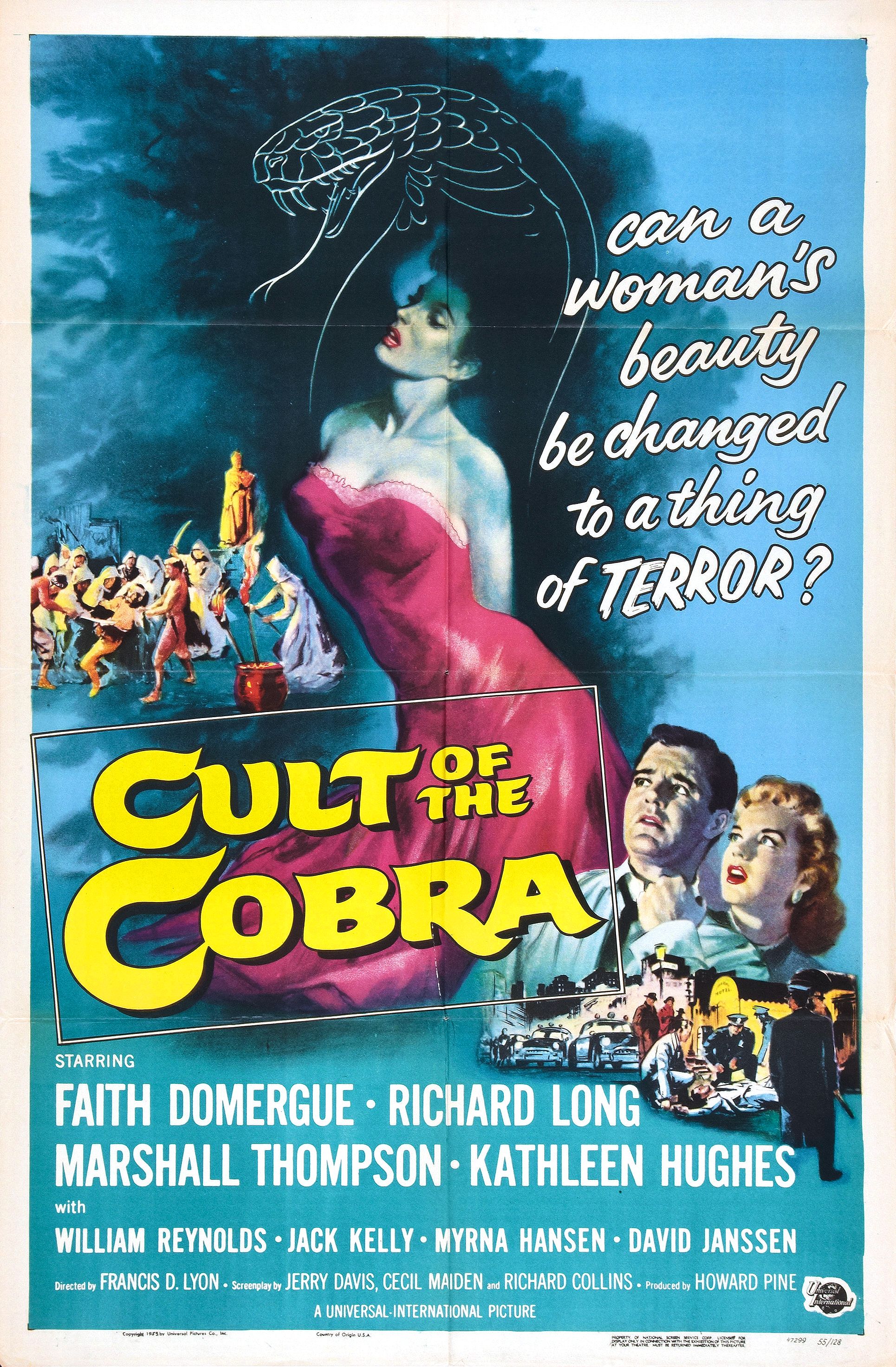
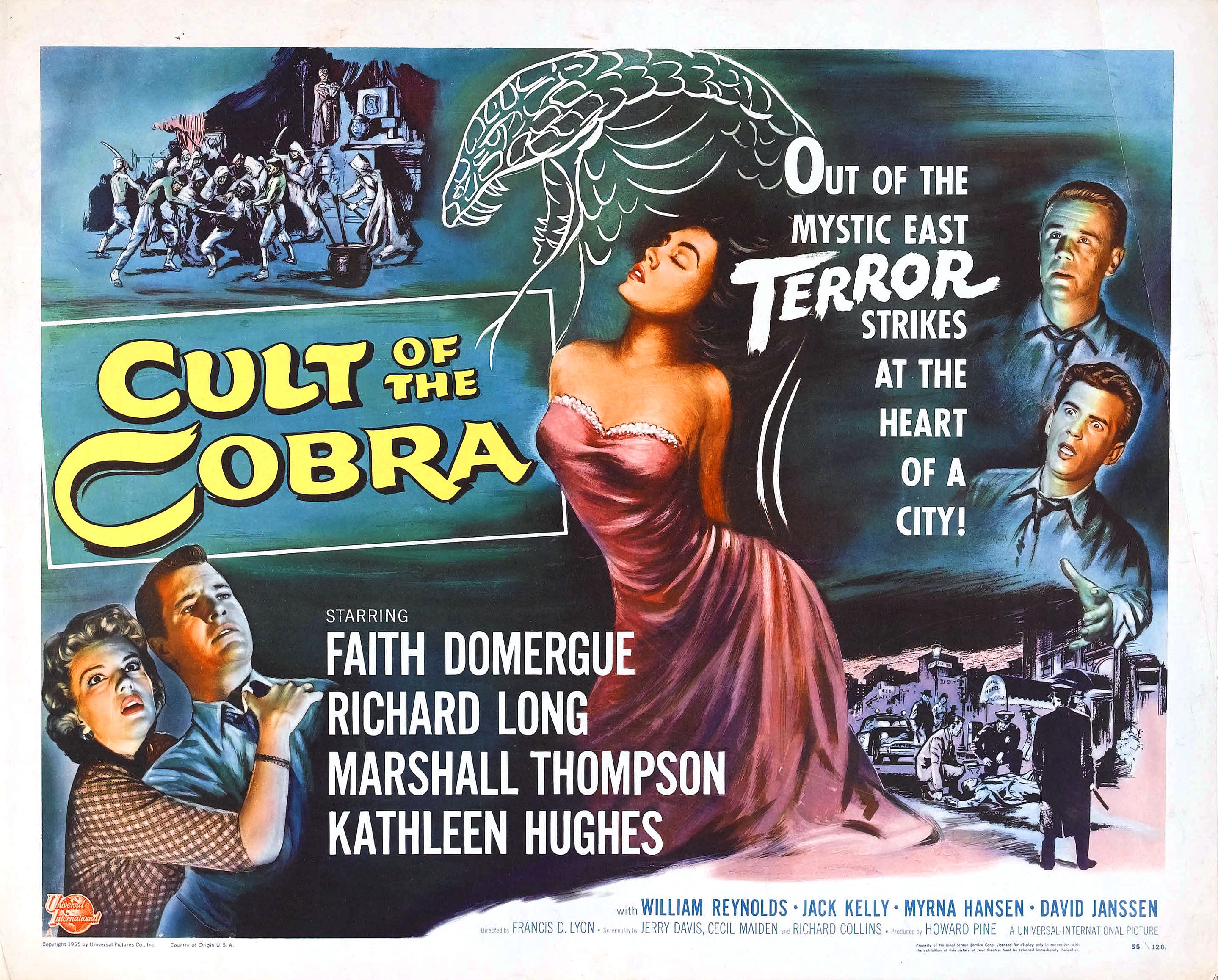
Movie Poster for Cult of the Cobra (1955)
Bolstered by the success of Creature from the Black Lagoon (1954), the Universal Monsters had nearly recovered from being made laughable alongside Abbott and Costello. Cult stands as an outlier in a shift for Universal away from supernatural menaces to threats born of science such as the Gill-man and the monsters in It Came from Outer Space (1953), This Island Earth (1955), and Tarantula (1955). While Cult makes a token reference to the speculative science behind the principle of “metamorphosis,” the transformation of woman into cobra is presented as traditional Near East Mysticism rather than a disease (lycanthropy) or a genetic trait. Indeed, the final images of the film only make sense in the context of magic, but that’s perhaps looking at things a little too closely in what is, essentially, a goofy cautionary tale about “Ugly Americans” and the dangers of fraternizing with foreign women.
As Air Force Cpl. Carl Turner, Jack Kelly is perhaps the most ruggedly handsome of the aforementioned “Ugly Americans” and is depicted as quite the ladies man, in both dialogue and in action. He is joined by five others, but the airmen are largely interchangeable in the early proceedings. About to be discharged from service, they’re up for some “wholesome” fun, mostly obsessed with the prospect of female companionship either in their exotic surroundings or back home.
Slender hangs illusion,
fragile the thread to reality.
Always the question: Is it true?
Truth is in the mind and the mind
of man varies with time and place.
The time is 1945.
The place is Asia.
Looking to get a photo op with a snake charmer, “Professor” Paul Able (Richard Long) takes the conversation in a strange direction when he asks “Hey, have you guys ever heard of snakes being changed into people?” The staff sergeant then proceeds to lecture the group on the cult of the lamians and principles of metamorphosis. Paul is a definite buzzkill, but the ham-fisted expository dialogue delivered by Richard Long (House on Haunted Hill) in this scene and the next sets the plot in motion less than three minutes in. The snake charmer, a lamian himself and member of the eponymous “Cult of the Cobra,” is more than happy to sneak the westerners into a cult ceremony for a hundred crisp American dollars.
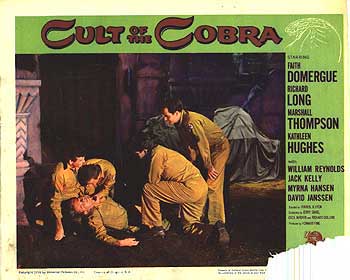
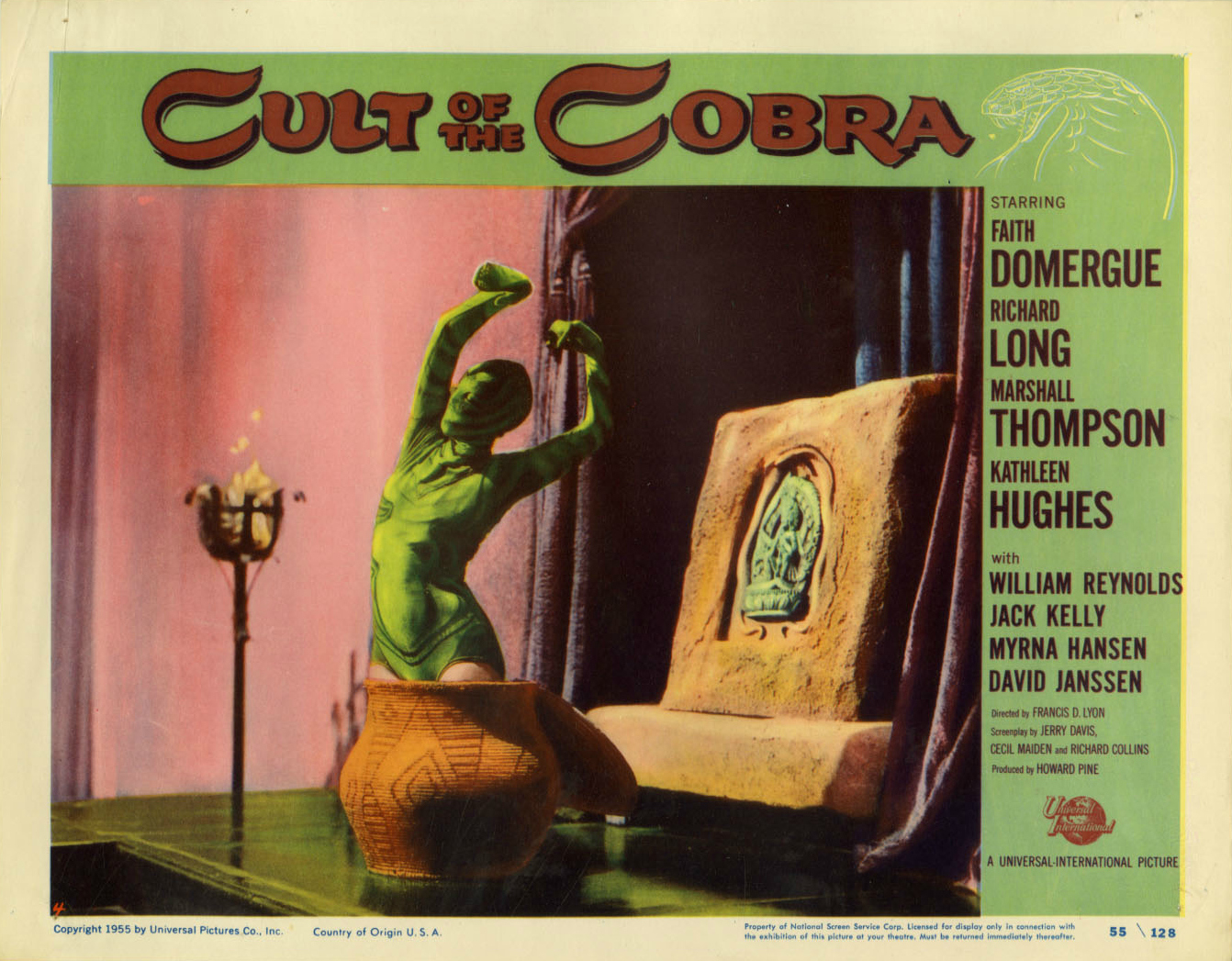
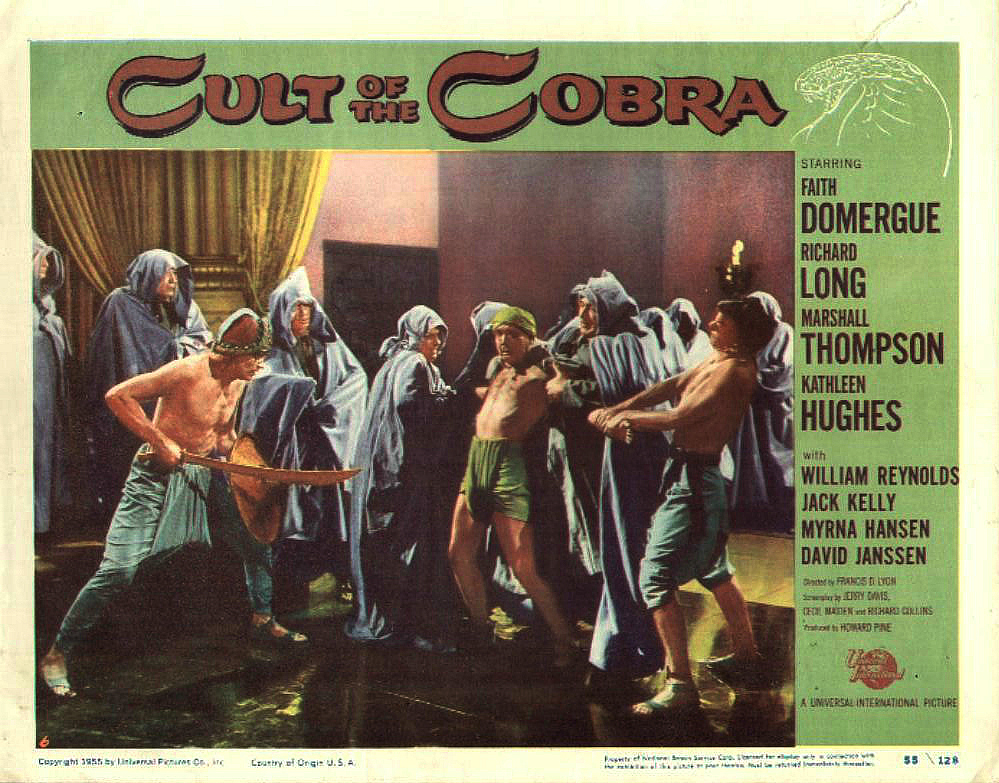
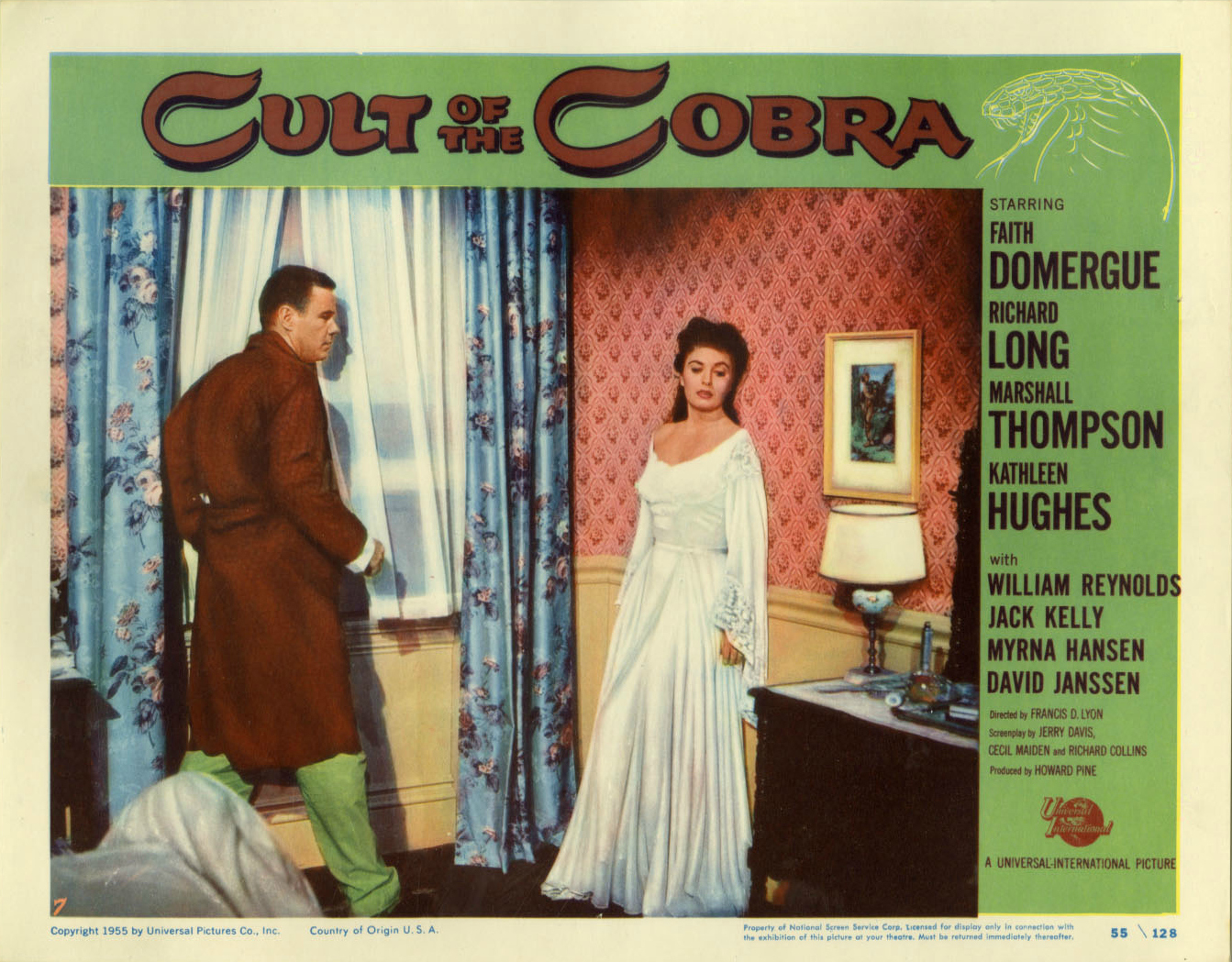
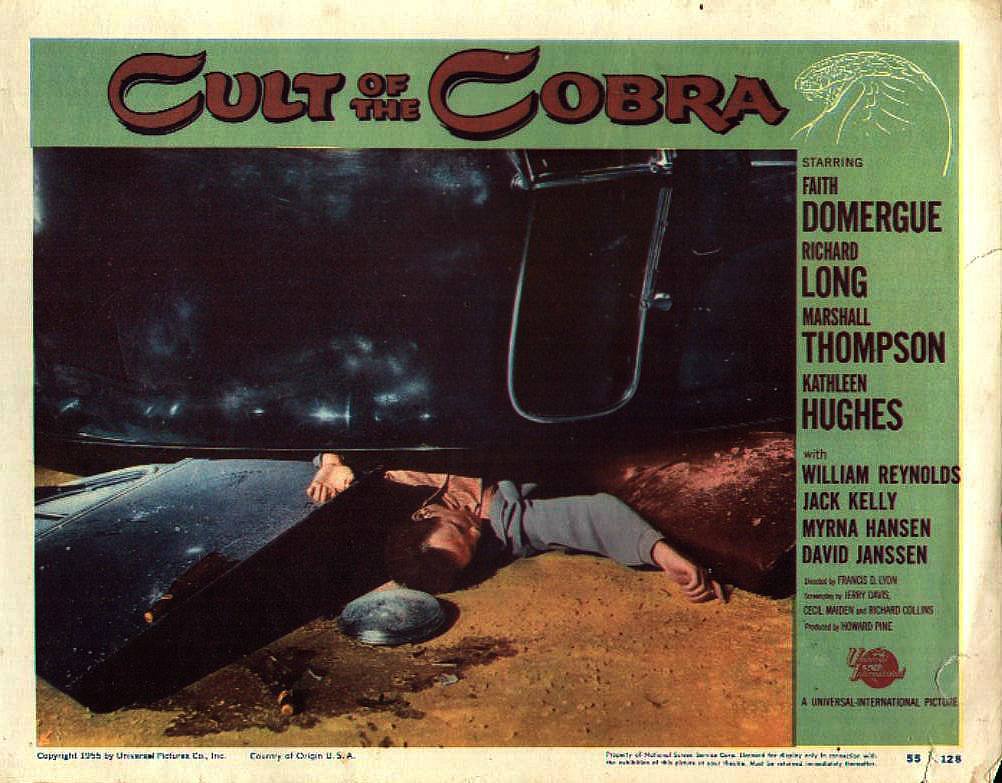
Despite multiple dire warnings, Cpl. Nick Hommel (James Dobson) can’t resist the temptation for a little flash photography. He is instantly caught and the Americans are forced to fight their way out of the temple. The whole sequence, drum-heavy orchestral score and eventual discovery included, is similar to the portrayal of Thulsa Doom’s Cult of Set in pulp classic Conan the Barbarian (1982).
The high priest curses them, proclaiming “One by one, you will die!” The snake charmer also tries to warn them of their unavoidable doom, but his admonishments are cut short by a tulwar to the gut as punishment for his transgressions. I guess he won’t be spending that dirty Benjamin any time soon.
The guys catch up to Nick on the street, finding him unconscious and snake-bit, but still alive. When he awakens in the hospital, he is quick to blame his poor judgment on being rip-roaring drunk, something firmly established in the earlier bar scene. Instead of leaving with his mates the next morning, Nick receives a late night visitor. An unmistakable shadow and point-of-view cobra-cam make his attacker obvious.
Once back in the States, we are reintroduced to the love triangle of Paul Able, his roommate Sgt. Tom Markel (Marshall Thompson), and Julia (Kathleen Hughes). Having made up her mind, Julia breaks it off with Tom at the bowling alley of Cpl. Rico Nardi (David Janssen). Tom takes the news well enough, but the love triangle turns into a love rhombus later that night when he rushes in to “rescue” a shrieking neighbor from an unseen intruder.
After some light flirting, Tom manages to convince his neighbor (Faith Domergue) to allow him to show her more hospitality than the city has thus far in her first week as a New Yorker. She introduces herself as Lisa Moya, but when she accidentally calls him Mr. Markel, she plays it off as having seen it on his mailbox. Serious red flag?
Tom takes Lisa out for her first hot dog and shows her the sights. She doesn’t drink, smoke, or kiss, and seems to rankle every animal they encounter, from cats to Tom and Paul’s dog, to carriage horses on the street. More red flags, but Tom is enchanted by this exotic mystery woman from across the hall.
After their day on the town, Tom insists on introducing Lisa to his roommate Paul. Lisa picks up a framed photograph of the six uniformed soldiers and inquires about each of them in turn.
If the relationship between roommates Tom and Paul is awkward and tense, that’s nothing compared to horndog Carl just openly hitting on his supposed buddy’s new girl shortly after meeting her. Jack Kelly manages to ooze oily swagger as he lays on the charm. His unwelcome attention earns him a crack across the jaw from a jealous Tom.
Soon, Tom’s Air Force buddies start getting eliminated in a series of cobra-cam sequences, one by one, just as the priest had promised. There’s a surprisingly solid stunt with a car flipping over during one of the attacks. Can “Professor” Paul Able and his remaining fellows uncover the truth behind these sudden deaths before it is too late?
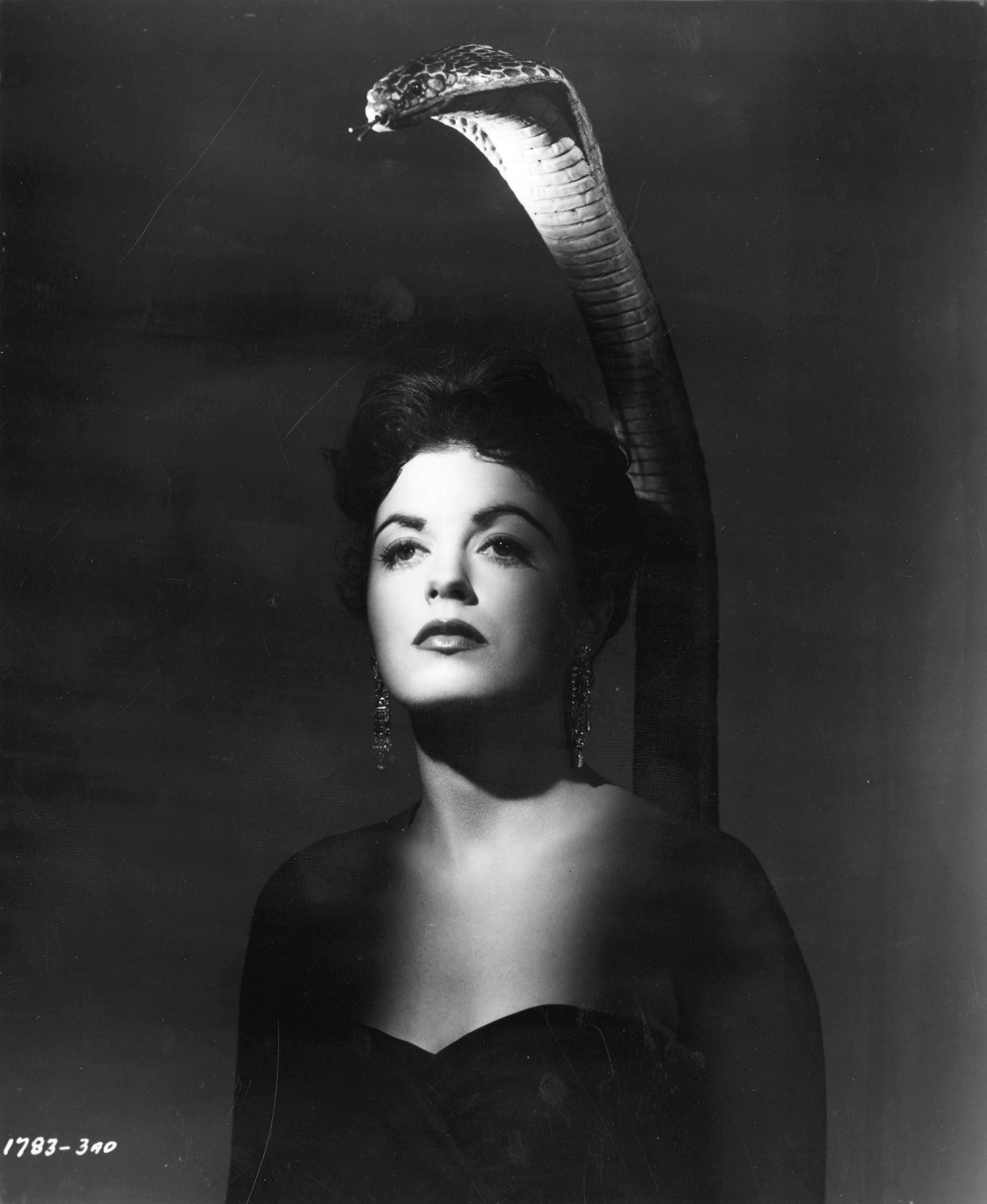
Promotional Photo of Faith Domergue as
Lisa Moya and her cobra alter ego from
Cult of the Cobra (1955)
Cult of the Cobra was the first of four genre films for Domergue released over four consecutive months in 1955 (along with This Island Earth, It Came from Beneath the Sea, and The Atomic Man).
As Lisa Moya, Domergue is cleverly lit in an almost noirish style. Her large, dark eyes are framed by light, leaving the rest of her head and shoulders shrouded in deep shadow, suggesting the hood of a cobra. It proves very effective and helps rescue the film from the noticeable absence of a signature transformation sequence as seen in such earlier Universal Monsters films as The Wolf Man (1941) and even Abbott and Costello Meet Dr. Jekyll and Mr. Hyde (1953).
Later the same year, Universal reunited Jack Kelly with Marshall Thompson and David Janssen as soldiers for the epic Audie Murphy bio pic To Hell and Back. The war film set a box office record for Universal that stood for nearly two decades. This record was eventually beaten by a low budget monster movie plagued with production troubles known as Jaws (1975).
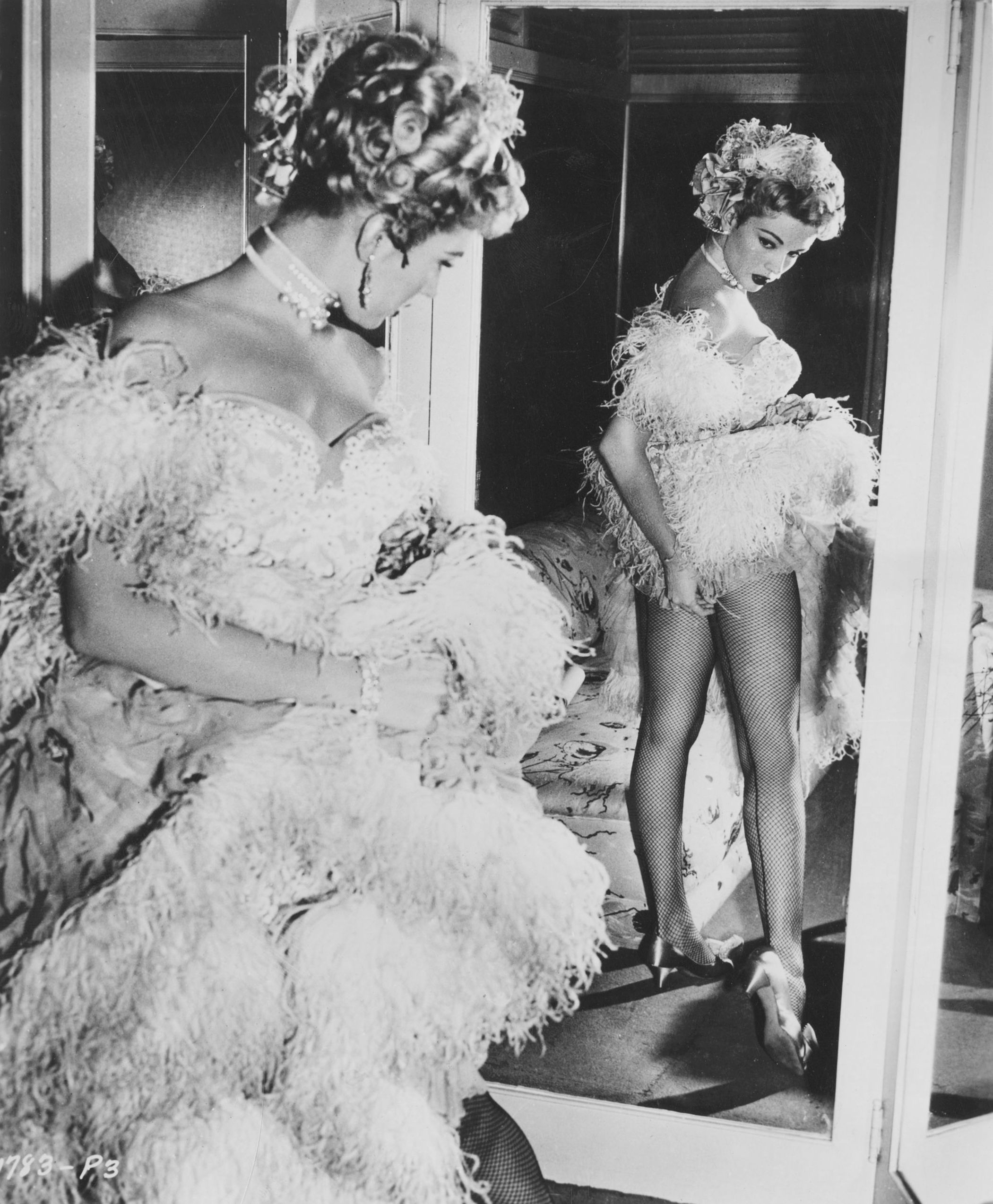
Promotional Photo of Kathleen Hughes as
Julia Thompson from Cult of the Cobra (1955)
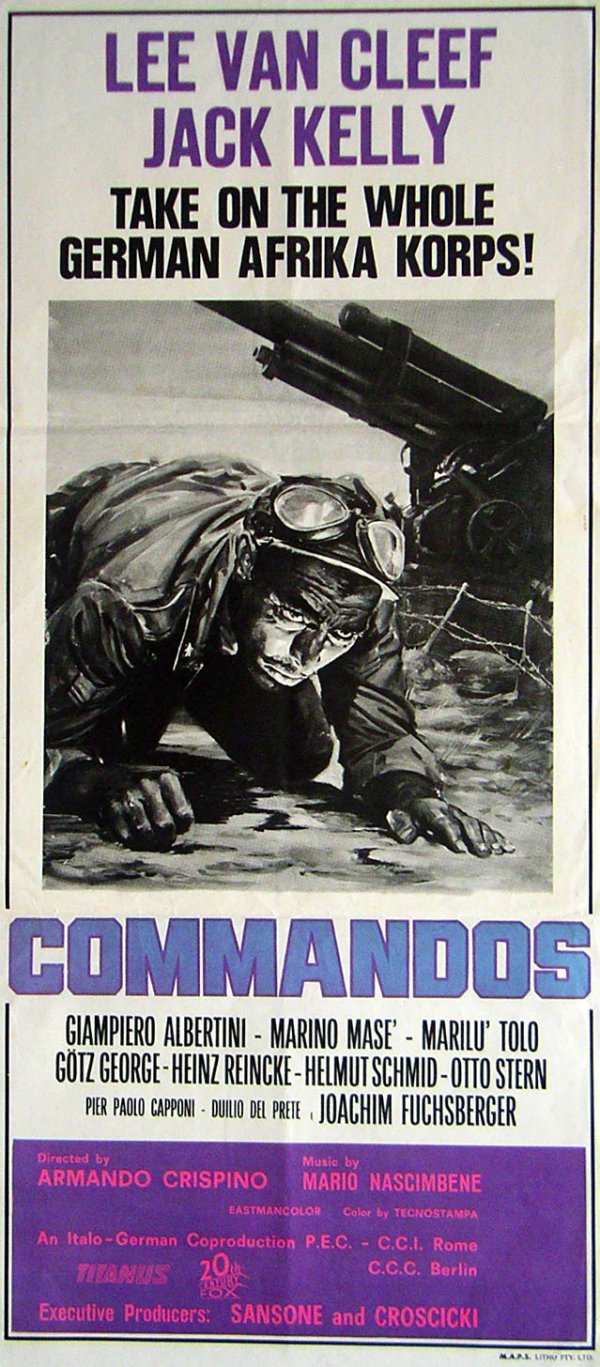
Jack Kelly continued to play soldiers and cowboys for much of his career, including the role of Captain Valli in one of my favorite macaroni combat films, Commandos (1968). His most iconic role is undoubtedly that of cowboy gambler Bart Maverick (brother to James Garner’s Bret). Beloved Bart would also be Jack’s final role, appearing in the NBC television movie The Gambler Returns: The Luck of the Draw (1991) just a year before his death from a stroke.
With appearances in such diverse genre fare as the classic Forbidden Planet (1956), Kurt Neumann’s She Devil (1957), and The Human Tornado (1976), this is surely not the last time we’ll discuss Jack’s career. We hope you’ll return as well the next time we remember the work of Jack Kelly.
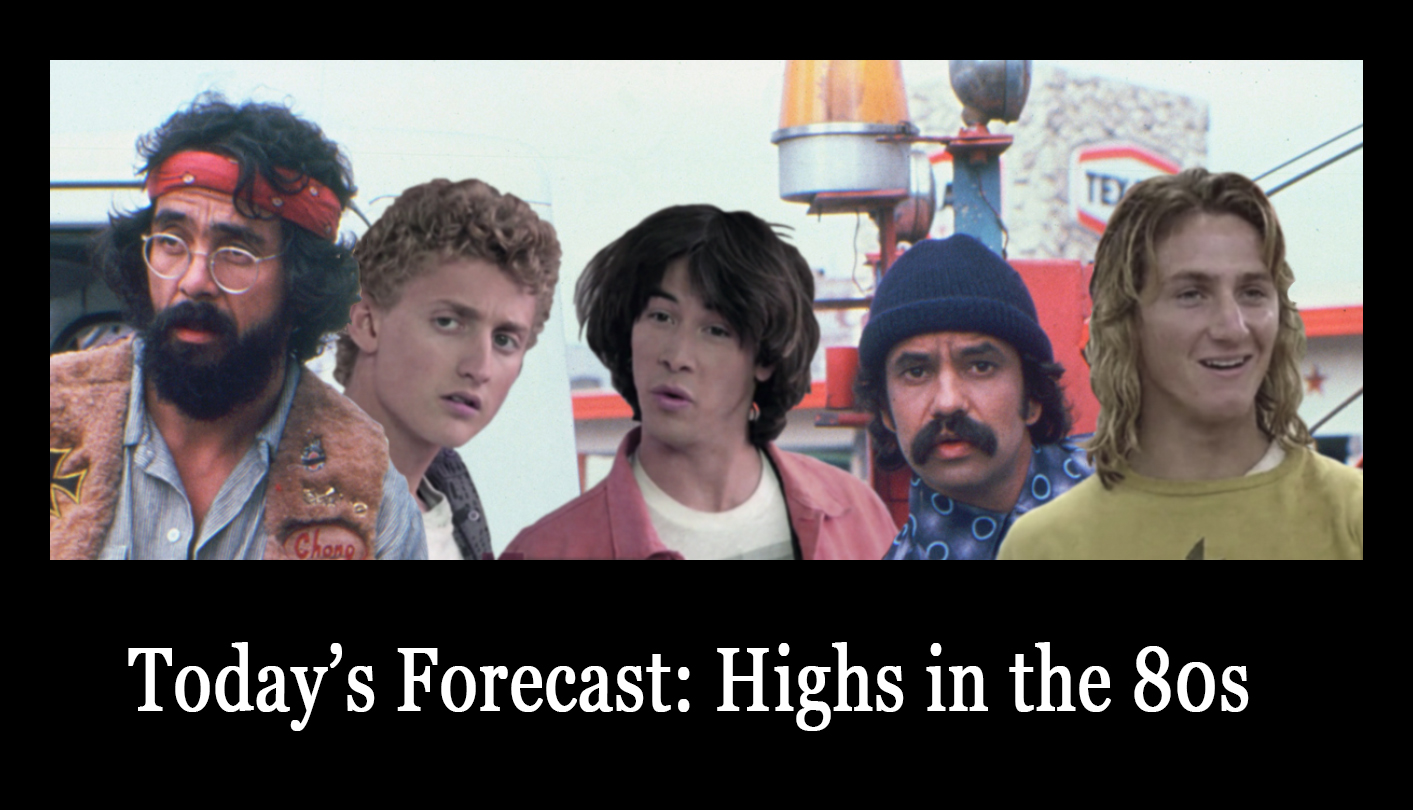
Graphic created by Jessica “Brushmistress” Rich and “RayRay” Rich
William Castle was born William Schloss, Jr. in New York City on this date in 1914. Schloss took the stage name Castle (translating “Schloss” from German to English) when he made his Broadway debut in 1922. At age 13, William was mesmerized by the Prince of Darkness himself, Dracula, played on Broadway by Bela Lugosi, just a few years before Bela reprised the role on film for Universal. On Lugosi’s recommendation, William Castle was given a job as an assistant stage manager, causing Castle to drop out of high school.
By 1941, Castle had acquired a knack for creative misrepresentation, having already posed as the nephew of famed Hollywood producer Samuel Goldwyn during his teenage years. With Orson Welles leaving his renowned Stony Creek Theatre in Connecticut to make Citizen Kane (1941), Castle seized upon the opportunity and convinced Welles to lease him the theater. Castle’s leading lady was the Berlin-born Ellen Schwanneke, but theater guild regulations dictated that German-born actors could only appear in plays originally performed in Germany. Castle responded by immediately conjuring up a fictional German play, Das ist nicht für Kinder (Not for Children). Ellen Schwanneke was invited to return to Germany by the Nazis, and this further fueled Castle’s hype machine. Promoting Schwanneke as “The Girl Who Said No to Hitler,” Castle used the telegram refusal as a press release of sorts. He even went so far as to secretly vandalize the outside of his own theater with swastikas to create additional controversy.
It was the first of what would become William Castle’s enduring legacy, promotional gimmicks that were often more memorable than the film they were designed to shill.
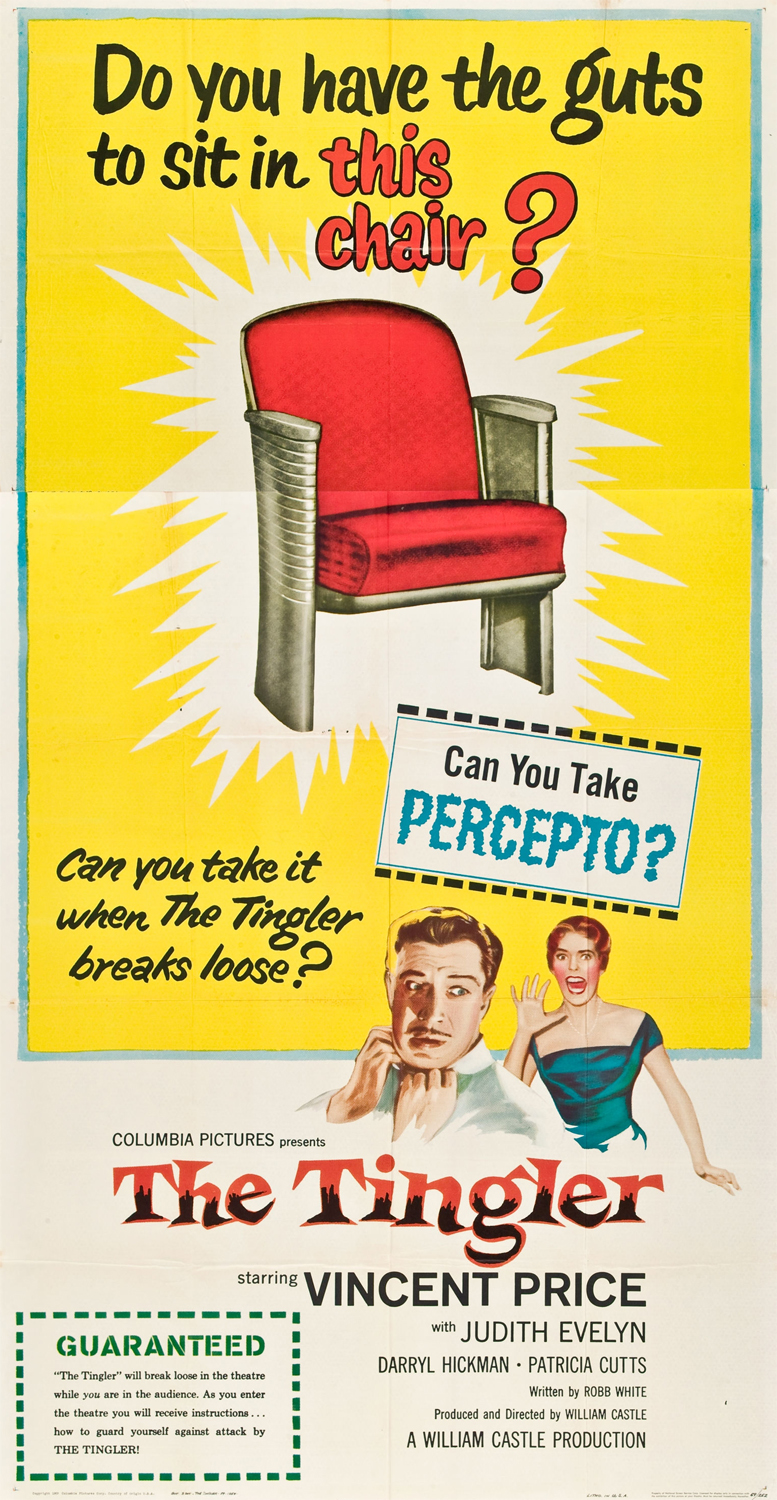
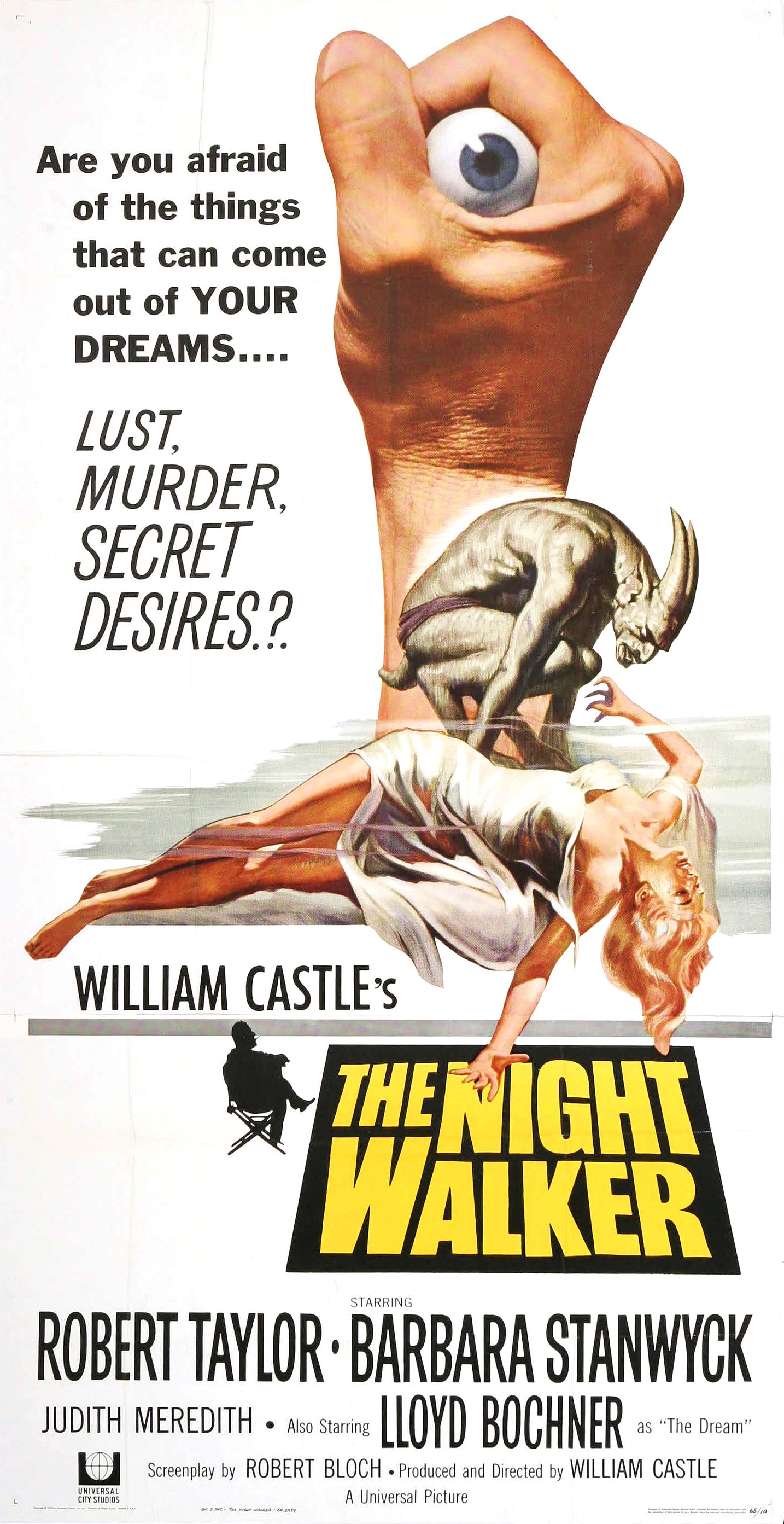
Movie Poster for The Tingler (1959)
The gimmick at work in William Castle’s The Tingler is Percepto, a 4D film experience provided by $250,000 worth of surplus WWII airplane wing deicing motors. These were affixed to the undersides of seats scattered throughout the theater. At an appropriate moment in the film’s climactic sequence, the screen would go black and these motors would buzz, eliciting screams from startled patrons in the gimmicked seats.
The Tingler is the third of five collaborations between screenwriter Robb White and director/producer William Castle, following Macabre (1958) and House on Haunted Hill (1959). White was a world traveler, a pilot in WWII, and a prolific writer, leaving his engineering job with DuPont after selling his first story for $100. Of his 24 published novels, only one remains in print, the Edgar Award-winning Deathwatch (adapted for ABC television in 1974 as Savages).
So, what is a “Tingler?” Well, according to Dr. Warren Chapin (Vincent Price), the Tingler is a parasite that lives at the base of the human spine, feeding upon fear. If it grows too large, unabated, it will eventually crush your vertebrae, providing a physical justification for death by fright. Screaming relieves some of this tension and causes the creature to relent. This is, admittedly, questionable science at best, and probably more appropriate to a Frankenstein film set in the Victorian era than in the late 1950s, but we’re not exactly talking Watch Mr. Wizard here. This is just a couple years after The Amazing Colossal Man (1957) proposed that the heart is composed of one big cell. I guess movie-goers weren’t exactly up on grade school anatomy back then or they just cared a lot less about such inaccuracies.
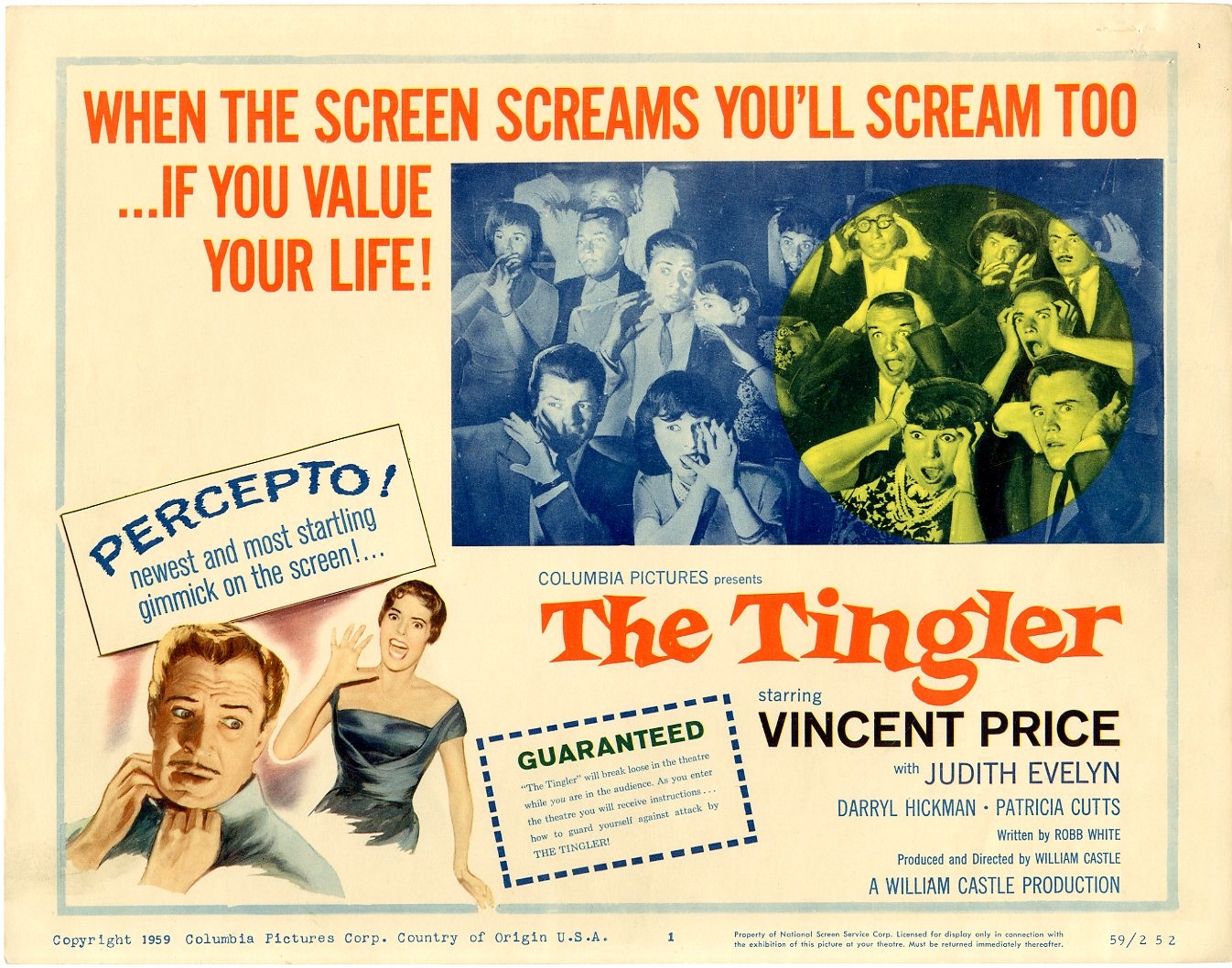
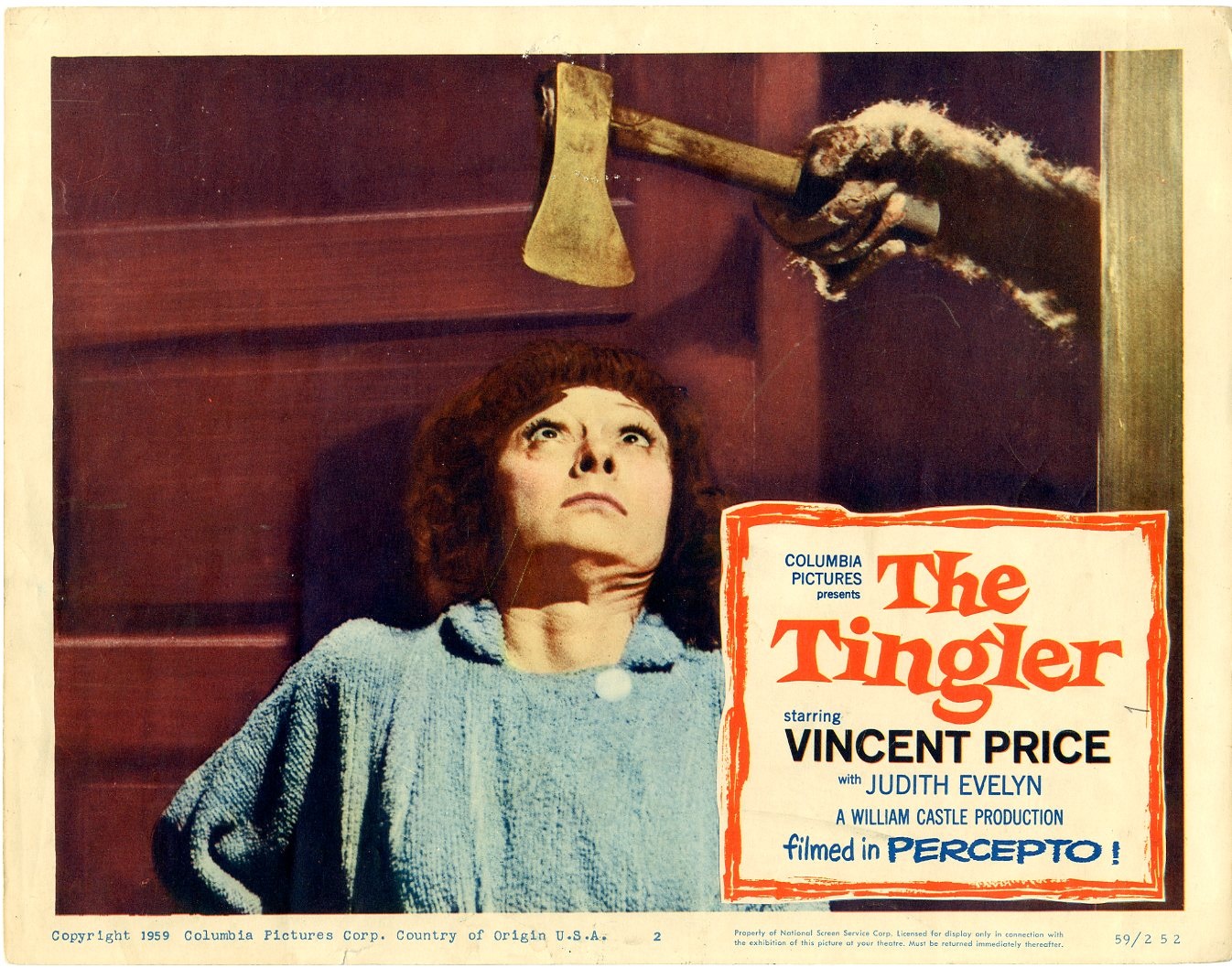
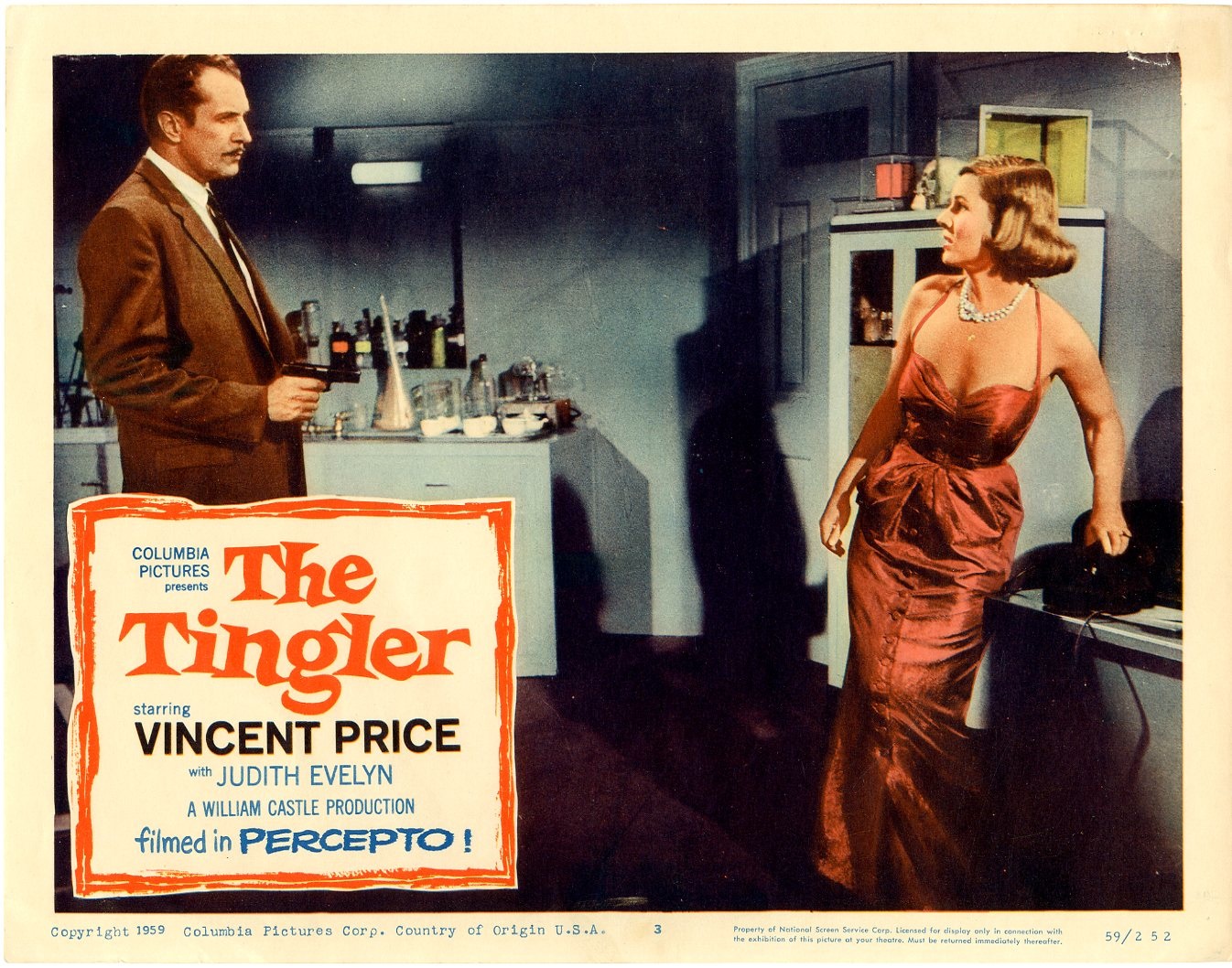
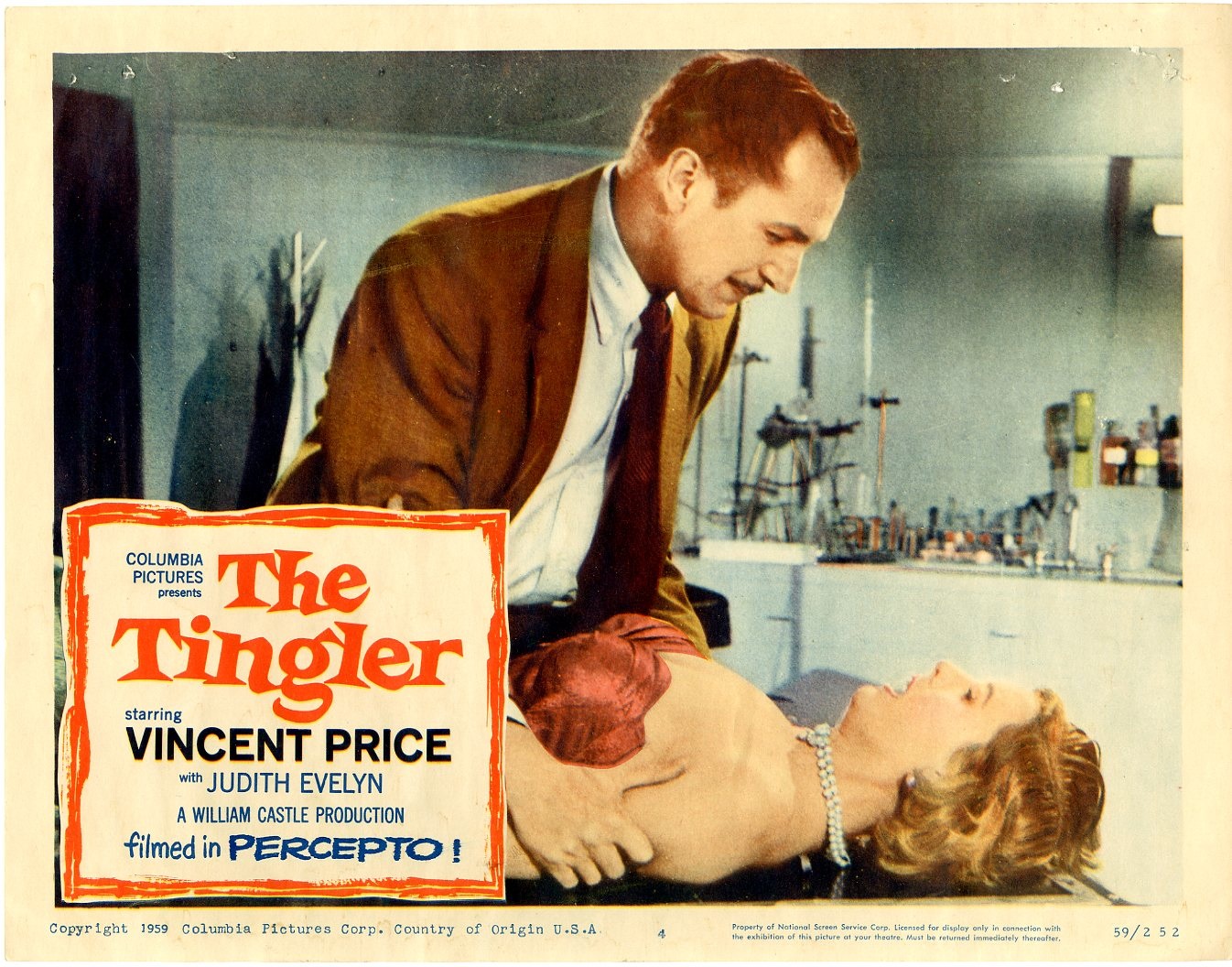
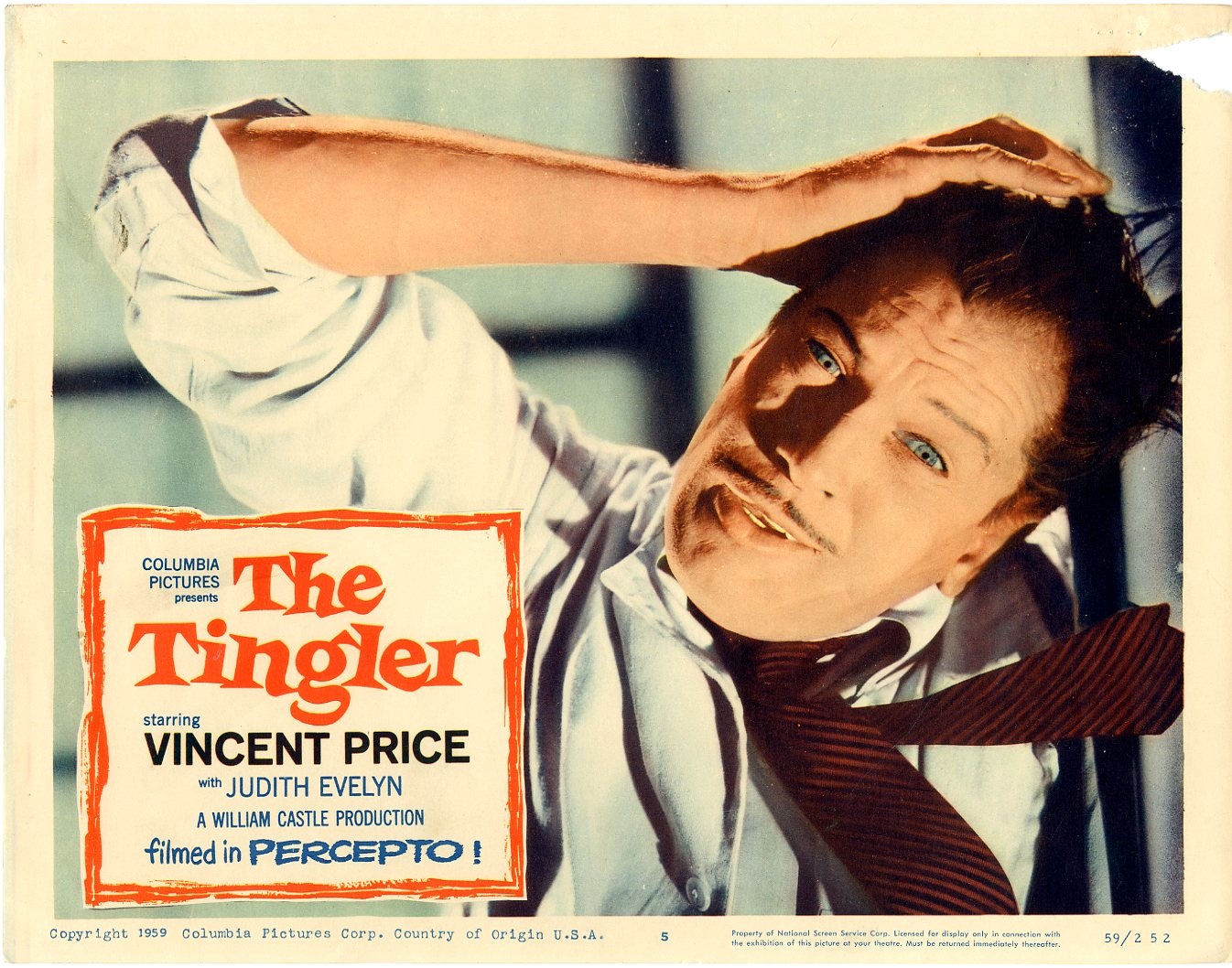
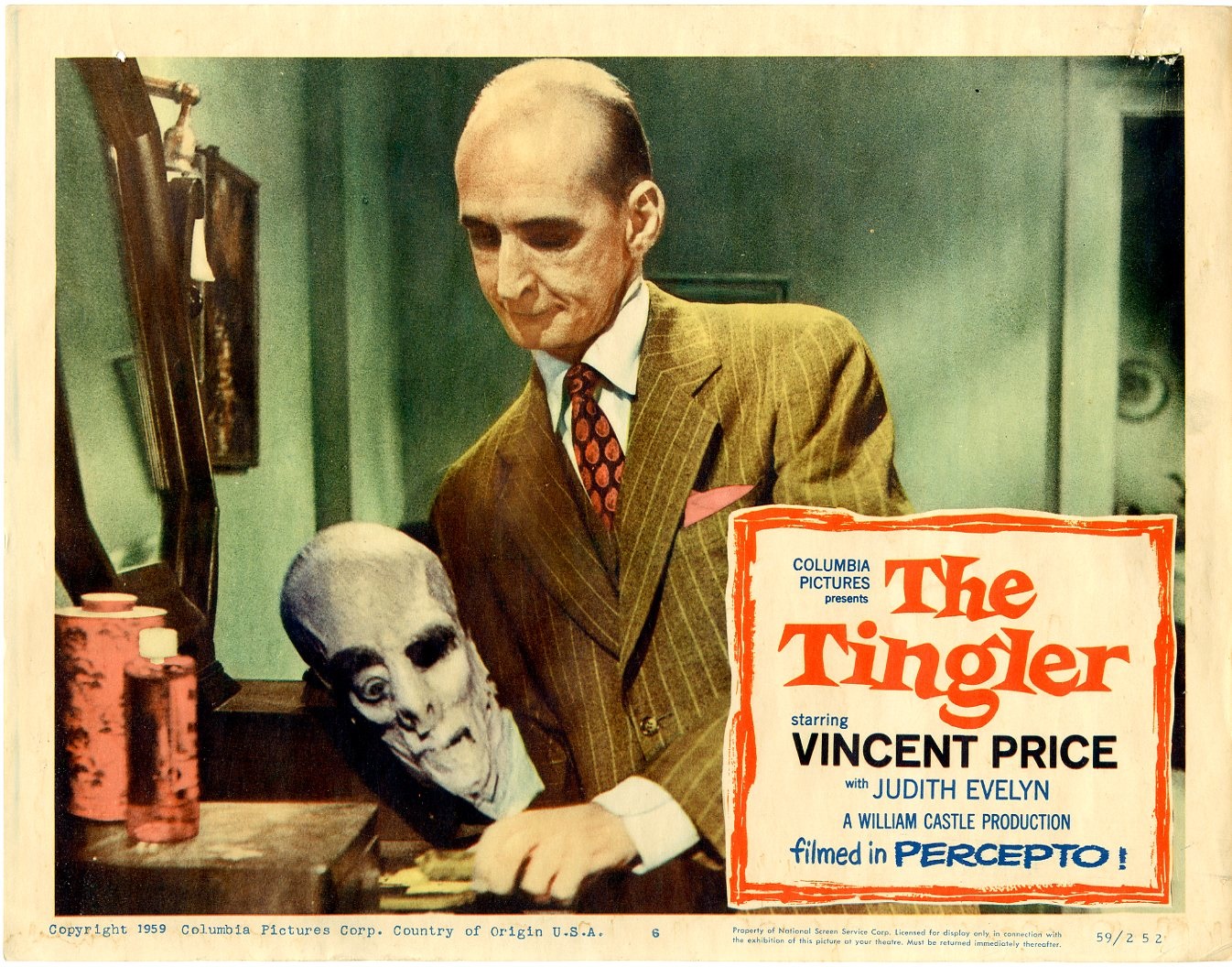
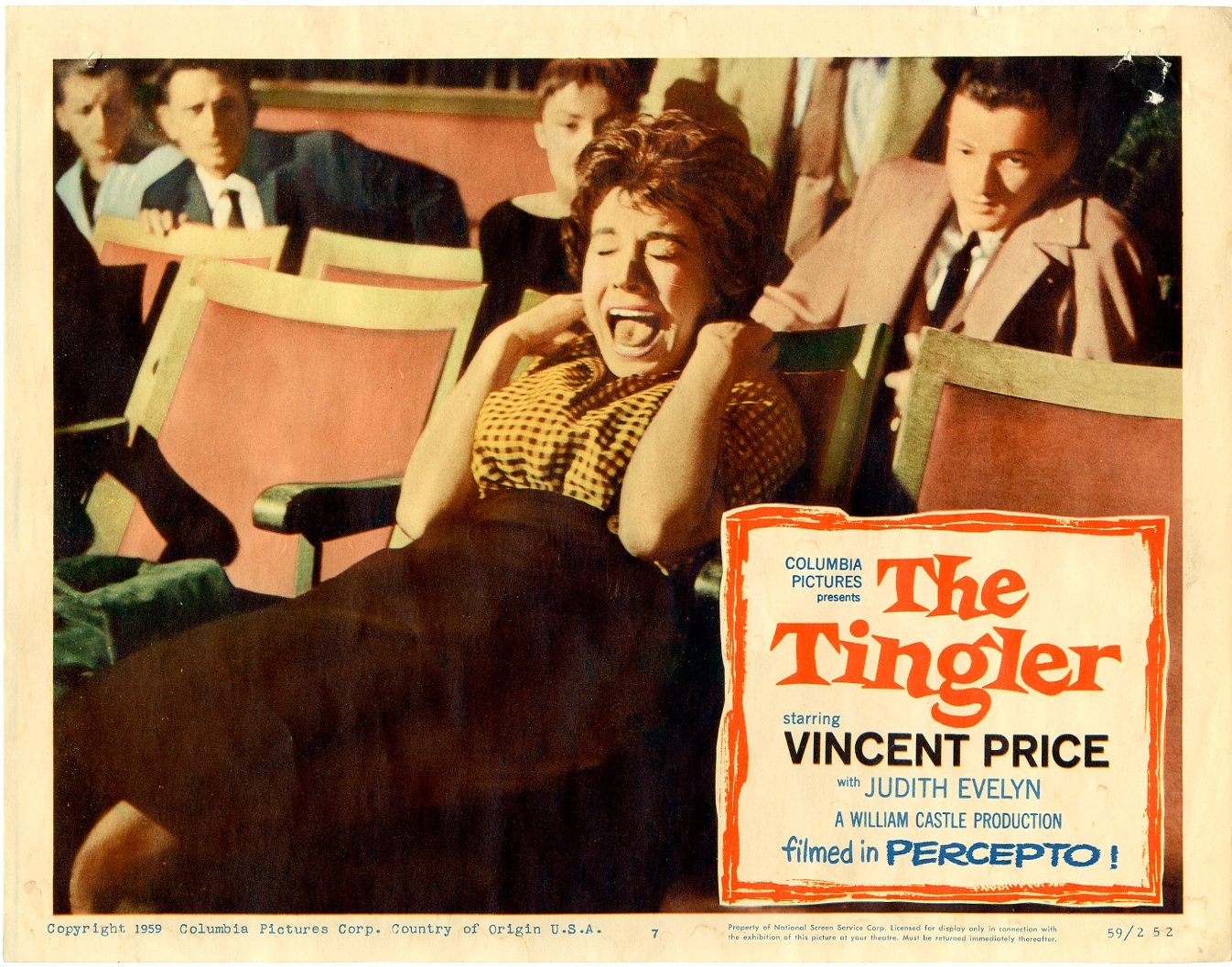
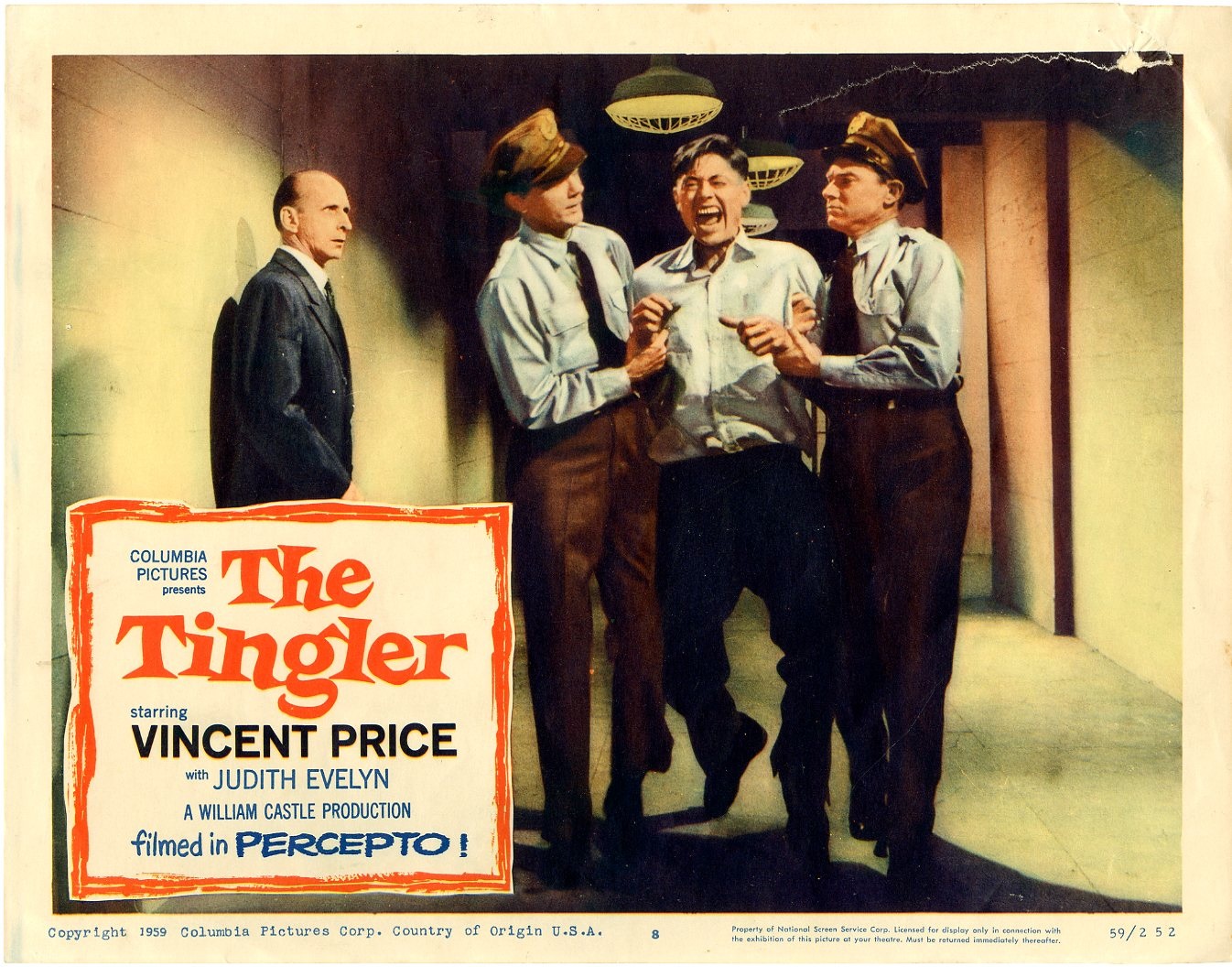
For a film with such a hokey sci-fi premise, The Tingler manages to pack in quite a bit of subtext without being preachy or ham-handed. The most obvious juxtaposition in the film is the thin veil between the rational and the irrational, a line easily blurred by drugs, madness, or both. When Chapin is stymied by his inability to frighten himself, he resorts to LSD, providing the first depiction of acid use in a major motion picture. The resulting experience is surprisingly restrained, largely conveyed by the often underrated acting talent of Vincent Price. One can only imagine the gonzo directorial choices of a Dario Argento, Terry Gilliam, or David Lynch.
A particularly stylish demonstration of the irrational is accomplished by filming one of the signature scenes in color. A bathtub filled with garish red blood sits in striking contrast to a set painted in gray tones and an actress covered in ashen make-up to match. The visual effect is surprisingly seamless.
This use of color also highlights another of the movie’s main themes, that of changes in the film industry itself. Oliver and Martha Higgins (Philip Coolidge and Judith Evelyn) are the owners of a struggling revival theatre that shows silent films. Oliver seems to speak from William Castle’s own heart when he pines that “Some of these old silents are just as good as the movies they make nowadays even though the sound and the color and the screen’s a block wide.”
Chapin’s source of wealth involves another of the film’s themes, that of class divide. Chapin’s laboratory and research are funded by his father-in-law, as his unfaithful wife, Isabel (Patricia Cutts), is all to quick to remind him. Isabel cuckolds him with a heartless bravado more commonly seen in film noir. Cutts is delightfully vampish as the spoiled daddy’s girl. Check her out in the lusciously lurid red dress to the left.
Pamela Lincoln and Darryl Hickman round out the cast as Lucy Stevens and David Morris, Chapin’s sister-in-law and research partner, respectively. An accomplished child actor, Hickman had well over a hundred credits to his name before being recruited by Castle to play Lucy’s fiancé in the film. Reluctant at first, Hickman was convinced by Castle that it would help his real life fiancé’s career. Darryl even declined his salary for the role. Sharing scenes as a fellow pathologist alongside Price’s Dr. Chapin, Hickman was forced to wear lifts to bridge the gap between his 5’10″ height and Vincent Price’s towering 6’4″ frame.
The climax of the film takes place in the revival theatre, during a surprisingly packed showing of the silent film Tol’able David (1921). This provides a great opportunity for the film to build suspense without dialogue while the tingler makes its way through the unsuspecting audience in search of a prospective victim. The film comes close to breaking the fourth wall as the screen goes black when Dr. Chapin cuts the power. For theatrical premieres, a fainting woman (in actuality a planted shill) is taken out of the audience on a stretcher. After some verbal reassurances from Chapin to the in-film audience (which serves double duty as Price reassuring the “real world” audience), our film resumes for the grand finale.
The Percepto gimmick made quite the impression on many theater-goers. In his youth, cult film director John Waters would seek out a rigged seat to get the full effect while viewing. “Rumble-Rama” in the film Matinee (1993) and the character of Lawrence Woolsey (John Goodman) are clearly based on Castle and his ambitious promotional style.
Even without the dubious benefits of Percepto, The Tingler is a fun little monster movie, well worth your time. For this and his many other contributions to genre film, we give heartfelt thanks to William Castle. He was certainly one of a kind.